1. Calculate
Choose your project scope and see the estimated price range.
Price a 2026 full-car repaint by quality tier (Maaco budget, standard single-stage, premium basecoat-clearcoat, show-quality), vehicle size, prep depth, and color change — then line up three competitive shop quotes.
Instant project estimate
The estimate is free. Additional details are optional.
Complete the project details and calculate to see a price range and next steps.
Clear next step
Choose your project scope and see the estimated price range.
Understand the cost drivers and what impacts your final quote.
Carry your scope into a local quote request if you choose.


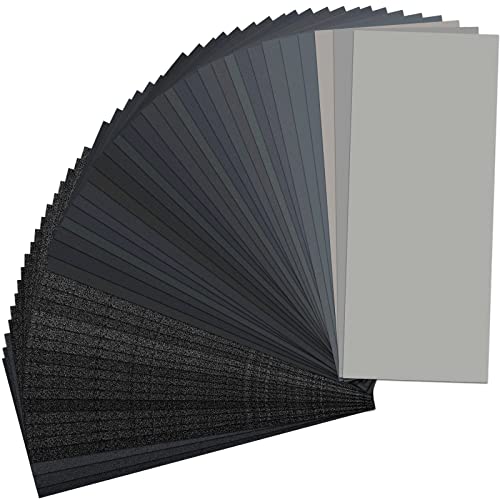
As an Amazon Associate, we earn from qualifying purchases.
Price as of Sep 21, 2026. Product prices and availability are accurate as of the date indicated and are subject to change. Any price and availability information displayed on Amazon at the time of purchase will apply.
A standard single-stage auto repaint costs $1,500–$5,000 for a baseline sedan; budget Maaco jobs start at $500–$1,500 and premium basecoat-clearcoat reaches $5,000–$15,000.
A budget single-stage repaint at Maaco or a similar production shop runs $500–$1,500. A standard single-stage or entry basecoat-clearcoat at a Midwest body shop costs $1,500–$5,000. A premium basecoat-clearcoat with proper scuff, masking, multi-stage clearcoat, and color sanding is $5,000–$15,000. True show-quality, concours, or frame-off restoration work starts at $15,000 and can exceed $50,000 for rare classics with tri-coat or candy colors.
| Quality Tier | Typical Cost | Prep & Finish |
|---|---|---|
| Maaco / budget | $500–$1,500 | Scuff only, 1–2 coats synthetic enamel, no jambs |
| Standard single-stage | $1,500–$5,000 | Light sand, masked trim, 2–3 coats, same color |
| Premium basecoat-clearcoat | $5,000–$15,000 | Full scuff-to-primer, 2–3 clearcoat passes, color sanding |
| Show-quality / concours | $15,000–$50,000+ | Strip to metal, block sand, tri-coat, hand buff |
Maaco is worth it for a daily-driver beater where you need curb appeal on a budget and plan to keep the car 2–3 years. The $500–$1,500 tier covers scuff-and-spray single-stage enamel without removing trim, masking door jambs, or fixing rust. Expect visible orange peel, overspray on weatherstripping, and noticeable fade in 18–36 months. It will NOT match factory quality, hold value at resale, or look right on a car worth over $10,000.
Changing color adds 20–40% to the quote because the shop must paint every surface the original color touches — door jambs, trunk channels, engine bay panels, under the hood liner, inside door shut faces, and the A/B/C pillar sills. Expect $400–$1,500 extra at the standard tier and $2,000–$6,000 at the premium tier. The color-change job also adds 2–5 booth days because jambs and engine bay need to be painted with doors and hood removed.
| Scope | Cost Adder | Notes |
|---|---|---|
| Same color refresh | $0 | Jambs can be masked off |
| Similar shade change | +$400–$1,500 | 2 coats usually cover |
| Radical color change | +$800–$3,000 | 3–4 coats + sealer base |
| Color change with full disassembly | +$2,000–$6,000 | Doors/hood/trunk removed for jambs |
Single-stage paint mixes color and clear in one product and sprays in 2–3 coats — cheaper, faster, easier to touch up, but the color layer IS the exposed surface so it fades, chips, and chalks faster. Basecoat-clearcoat sprays the color as a thin base then adds 2–3 coats of crystal-clear urethane on top — the clear protects the color from UV, stone chips, and swirl marks, and can be color-sanded flat then buffed to a deep mirror shine. Basecoat-clearcoat is the modern factory standard and the right call for anything you want to last 8–15 years.
It depends on the car and the tier. A premium basecoat-clearcoat repaint on a 1970s–1990s classic can add $3,000–$15,000 at resale because buyers in that market pay for presentation. A budget Maaco paint on a late-model economy car adds roughly zero — the buyer sees the repaint as a red flag (hiding damage) and the KBB value barely moves. For modern daily drivers, paint correction ($500–$1,500) almost always beats a full repaint for ROI. Before you authorize anything over $3,000, pull your car’s retained value with the car value calculator.
Maaco-tier turnaround is 1–3 days because the shop sprays in assembly-line fashion with minimal masking. Standard single-stage at a local body shop runs 5–10 business days. Premium basecoat-clearcoat with proper prep, multiple clearcoat passes, and color sanding takes 2–4 weeks. True show-quality, frame-off restoration, or concours work can take 4–12 MONTHS because each panel is blocked, sealed, shot, sanded, and polished individually and the car is often disassembled to bare shell.
Inputs
Result
The most common budget ticket: an older economy sedan getting a fresh single-stage coat to hide fade and clear-coat failure. No jambs, no rust repair, visible orange peel. Good for curb appeal if you plan to sell within 2 years.
Inputs
Result
Trucks are bigger, taller, and have a bed cavity that doubles masking labor. Sand-to-metal on a daily-driver truck typically uncovers rust at the rocker panels and bed seams, adding $800–$2,000 in filler and primer work.
Inputs
Result
A frame-off Mustang restoration with period-correct color, hand-block sanding, tri-coat base, and multiple clearcoat passes. The engine bay, trunk, inner fenders, and door jambs are all painted with the car disassembled to a bare shell.
Quote = Tier base × Vehicle-size factor × Classic multiplier + Prep adder + Color-change adder + Regional labor premiumFull-car paint pricing stacks a quality-tier base (Maaco $500–$1,500, standard $1.5K–$5K, premium $5K–$15K, show $15K–$50K+), scales for vehicle size (sedan baseline, SUV +20%, truck +30%, classic 2–4x), then adds prep depth, color change, and regional labor cost.
Where:
Tier base= Maaco $500–$1,500; standard $1.5K–$5K; premium $5K–$15K; show-quality $15K–$50K+Vehicle-size factor= Sedan 1.0x; SUV 1.15–1.25x; truck/van 1.25–1.35xClassic multiplier= 2–4x on the equivalent modern-car tier due to hand-block prep, period color match, and multi-stage finishesPrep adder= Scuff $0; sand-to-metal +$500–$2,000; full restoration +$2,000–$10,000Color-change adder= +20–40% for jambs, engine bay, trunk channels; 2–5 extra booth daysRegional premium= CA/NY/NJ +20–35%; TX/FL +5–10%; Midwest baselineFull-vehicle repaint pricing in 2026 spans a 100x range from a $500 Maaco scuff-and-spray to a $50,000+ concours restoration, and the biggest mistake most owners make is assuming the mid-tier price gets them mid-tier quality. It does not. Four distinct quality tiers dominate the market: budget single-stage production shops (Maaco, Earl Scheib legacy shops, 1-Day Paint) at $500–$1,500; standard single-stage or entry basecoat-clearcoat at local body shops at $1,500–$5,000; premium basecoat-clearcoat with proper scuff-to-primer prep at $5,000–$15,000; and true show-quality or concours-level work at $15,000–$50,000+ for collectibles and frame-off restorations.
This guide walks every tier with real 2026 pricing, the Maaco trade-offs most owners do not hear about, the basecoat-clearcoat quality ladder, and the classic-collectible multiplier that can 3x the same quote. Use the calculator above for a personalized estimate by tier and vehicle, then check whether the repaint returns positive ROI by pulling your car’s current market value with the car value calculator before signing any authorization.
Auto paint pricing also intersects three adjacent decisions most owners miss: whether a vinyl wrap beats a repaint for your use case, whether ceramic coating on existing paint beats a full repaint, and how much of the paint quote you could save by doing the prep (sanding, masking, wet-sand) yourself. The sections below close each loop.
| Quality Tier | Typical Cost | Turnaround | Finish Life |
|---|---|---|---|
| Maaco / budget single-stage | $500–$1,500 | 1–3 days | 18–36 months |
| Standard single-stage | $1,500–$5,000 | 5–10 days | 5–8 years |
| Premium basecoat-clearcoat | $5,000–$15,000 | 2–4 weeks | 10–15+ years |
| Show-quality / concours | $15,000–$50,000+ | 4–12 months | 20+ years w/ garage |
Before authorizing any paint over $3,000 on a car worth under $15,000, pull retained value with the car depreciation calculator. Paint above 25% of vehicle value only makes sense for collectibles or pre-resale flips — otherwise paint correction + ceramic coating delivers better ROI.
Tier 1 (Maaco / budget single-stage) is production-line paint work. The car rolls in, gets a 15-minute scuff with Scotch-Brite, gets lightly masked with paper over windows and tires, and sprays 2–3 coats of synthetic enamel in a booth shared with 8–20 other cars that day. Door jambs, engine bay, trunk channels, and inside of the fuel door stay original color. Orange peel texture is visible in reflections, overspray on weatherstripping is common, and the finish chalks in 18–36 months. It costs $500–$1,500 because labor is under 4 hours.
Tier 2 (standard single-stage or entry basecoat-clearcoat) is what most independent body shops sell as a "full repaint." The shop sands the existing paint to 320 or 400 grit, spot-primes any bare metal or bondo, masks trim properly (sometimes removing bumpers and mirrors), and sprays 2–3 color coats plus a light clearcoat on the basecoat variant. Labor runs 25–60 hours and paint material is $300–$800. Jambs are an option ($300–$800 extra) but not included standard.
Tier 3 (premium basecoat-clearcoat) is what most people picture when they say "paint job." The shop scuffs or strips to primer on every panel, spot-repairs dings and rust, lays a sealer coat, then 2–3 base color coats, 2–3 clearcoat passes, and color-sands + buffs the final clear to mirror flatness. Labor is 80–150 hours. Material cost with waterborne base and premium urethane clear runs $800–$2,500. Jambs, engine bay, and trunk are always included at this tier. Tier 4 (show-quality) adds body prep to the same meticulous level as the paint itself — block-sanding every panel with 800 grit for 40+ hours per panel, media-blasting to bare metal, multi-stage sealer / base / mid-coat / clear, and hand-polishing with 5000–8000 grit pads. It is artisan-level work and priced accordingly.
The tier jump most owners get wrong is Tier 1 to Tier 2. A $1,200 Maaco quote and a $2,800 local-shop quote look similar on paper and the local shop often promotes the extra $1,600 as "real bodywork and better paint." In reality, the local shop at $2,800 is still single-stage enamel, just with better masking and a cleaner booth — finish life jumps from 24 months to maybe 5 years, but the surface still fades, still chalks, and still cannot be color-sanded. The meaningful durability leap comes at the Tier 2 to Tier 3 transition where clearcoat enters the stack. If your budget tops out at $3,000, you are buying a better single-stage job, not a lower-end premium job — and that reality sets expectations correctly before you authorize work.
Single-stage paint mixes the color pigment and the protective resin into one product. The shop sprays 2–3 coats and walks away — the surface you see IS the color layer. It is cheaper because it is one product and fewer coats. The trade-off is that UV light, tree sap, bird bombs, stone chips, and swirl marks all attack the color layer directly. Expect fade in 5–8 years, inability to color-sand (you would sand INTO the pigment), and no repair pathway that does not show a patch line.
Basecoat-clearcoat sprays the color as a thin non-glossy base (1–2 coats, 4–8 mils thick), then applies 2–3 coats of crystal-clear urethane on top (4–6 mils per coat). The clear layer takes all the environmental damage while the color underneath stays protected. Clearcoat can also be color-sanded flat then buffed with progressively finer compound until the reflection is mirror-distortion-free — impossible with single-stage. Modern metallic, pearlescent, and tri-coat colors physically cannot be done in single-stage because the flakes or mica in the color need a clear layer to float in for proper visual depth.
The price jump from Tier 2 ($1.5K–$5K) to Tier 3 ($5K–$15K) reflects not just more coats but fundamentally more labor — proper basecoat-clearcoat requires 2–3x the sanding hours, a compliant downdraft booth, waterborne base material (mandatory in most US states since 2022), and color-sanding + buffing at the end. If a shop quotes $2,000 for "basecoat-clearcoat" they are skipping steps, usually the color-sand or the proper scuff-to-primer prep.
Paint-material brand also signals tier reliably. Tier 1 shops typically use house-brand or private-label enamel in basic colors — functional, cheap, no factory-match. Tier 2 shops use PPG Omni, Sherwin-Williams AWX, or Axalta ChromaBase at $80–$150/gallon. Tier 3 shops use PPG Envirobase waterborne, Sikkens Autowave, or Spies Hecker Permahyd at $200–$400/gallon with matching Glasurit, DuPont ChromaClear, or Axalta ClearPlus urethane clearcoat at $300–$600/gallon. Tier 4 often uses PPG Deltron-DBU or Glasurit 22/923 imported refinish systems costing $500–$900/gallon. If a shop will not disclose the exact product code of its base and clear, treat the quote as Tier 2 regardless of what the invoice claims.
| Attribute | Single-Stage | Basecoat-Clearcoat |
|---|---|---|
| Typical cost | $500–$3,000 | $3,000–$15,000 |
| Coat count | 2–3 color coats | 1–2 base + 2–3 clear |
| Material cost | $150–$500 | $600–$2,500 |
| Finish life | 5–8 years | 10–15+ years |
| UV protection | 70% | 98% |
| Color-sand possible | No | Yes |
| Pearlescent / metallic | Limited | Full support |
| Best for | Fleet, daily driver, tractor | Modern cars, restorations |
A classic or collectible vehicle runs 2–4x the equivalent modern-car tier because the work required is fundamentally different. On a 1967 Camaro headed for a Carlisle show, the shop strips every panel to bare metal (often using chemical dip or blast media), hand-block-sands with 80–400–800–1000 grit progression on every panel, uses period-correct colors that often require custom mixing from archived formulas, applies 3–5 stages of sealer / base / mid-coat / clear, and hand-polishes the final finish with 3000–8000 grit foam pads over 40–80 hours. A tier-3 premium paint on a modern sedan that takes 100 labor hours takes 300–500 on the Camaro.
Classic paint pricing also includes body prep that modern-car shops do not touch. Rust repair in the trunk pan, quarter-panel patch panels welded in, lead or epoxy filler work at seams, replacement of any panel too thin for refinish, and corrosion prevention in hidden areas (rocker panels, trunk wells, inside fenders) all happen BEFORE paint. A show-quality job typically includes $3,000–$12,000 of pre-paint bodywork that is visible only as "the panels look perfectly straight in reflection" at the end.
Budget a concours paint job on a collectible at $20,000–$45,000 and a true frame-off with every ancillary painted separately (engine, firewall, trunk channels, inner fenders, underside of the hood) at $40,000–$80,000. ROI at resale on a documented restoration runs 60–90% of cost for blue-chip classics — a $30,000 paint job on a properly-restored 1969 Mustang adds $18,000–$27,000 to auction price. Before committing, compare the paint cost to car depreciation economics against keeping the car original or going with a lower-tier respray.
Documentation is half the resale premium. A concours shop that delivers a 40–80 page photo-record of every prep step (media blast, primer, block-sand, base, clear, polish) with dated photos and receipts for every material used can defend the paint investment in front of any auction bidder. A show-quality paint job WITHOUT that paper trail sells for 30–50% less than an identical documented job. Require the documentation package up front in writing and build it into the contract — Hagerty, Mecum, and Barrett-Jackson buyers specifically ask for it, and its absence drops the car a full tier in the bidder perception.
A full paint job is not always the right move. If your goal is curb appeal without permanent commitment, a full vinyl wrap is reversible, finishes in 3–5 days, runs $2,500–$8,000 on a sedan or small SUV, and lasts 5–7 years before peeling. Wrap shops also offer color-shift, matte, satin, and textured finishes that paint literally cannot replicate. If your paint is still structurally sound but dull or swirled, paint correction (machine polish with compound and polish pads) costs $500–$1,500 and removes 80–95% of visible swirl, oxidation, and light scratches — no new paint needed.
If you are protecting fresh paint, ceramic coating is the strongest modern option. A professional 5–9 year ceramic coating ($800–$2,500) forms a semi-permanent silica-dioxide layer on top of the clearcoat that resists UV, chemical etching, swirl marks, and bird-bomb damage. Paying for premium paint and skipping ceramic is leaving performance on the table. Pair a $8,000 basecoat-clearcoat with a $1,500 ceramic coating and you get 10–15 years of show-ready finish vs 7–9 on bare premium paint.
The decision tree: paint is dull but sound = paint correction + ceramic ($1,500–$3,000 total). Paint has fade / clearcoat failure / flaking = full repaint at tier matching vehicle value. Want temporary style change or protection = vinyl wrap. Collectible / restoration = premium or show-quality paint, no exceptions. For accurate total-cost-of-ownership math on each path, model against your auto insurance and depreciation numbers to ensure the paint investment does not exceed rational ROI.
Before committing to a $5,000+ premium repaint, get quotes for wrap AND ceramic from separate vendors. A $6,000 wrap + removal later may serve the same goal as a $10,000 repaint — and leaves the underlying paint intact. Quote three of each and let the numbers decide.
Paint shop quality is invisible until it is on your car. Three vetting moves separate the good shops from the rest. First, ask to walk the booth — a modern downdraft booth with active ventilation, clean filters, and sealed lighting indicates a shop that invested in equipment. A "paint booth" that is just a corner of the main bay with plastic sheeting is where orange peel and dust contamination come from. Second, ask for 5–10 cars-done-this-month with customer contact info and drive out to see two in person. Paint shops love to show the one concours Mustang that took 8 months and hide the weekly Camry jobs that run $1,500.
Third, request a written quote itemized by line: prep hours, paint material by product (brand and product code), labor hours for booth time, labor hours for color sanding / buffing, and jambs / engine bay inclusion. A shop that refuses to itemize is hiding skipped operations. Specifically confirm: brand and product line of base (PPG Envirobase, Sikkens, Spies Hecker, etc.), brand of clearcoat (DuPont, Glasurit, Axalta), whether the material is waterborne-compliant for your state, and how many clearcoat passes are included.
Red flags that should end the conversation: cash-only or deposit-over-50% demands, no physical address or licensed sign, no posted shop labor rate, no paint-material warranty, pressure to sign same-day, the shop is a mobile operator with no booth, or the quote is 40%+ below two other bids. Three written bids is the minimum for any job over $3,000 — the cheapest bid more than 25% under the middle bid is almost always skipped prep, cheaper material, or no jambs. After the job finishes, budget a post-paint detail using the car detailing calculator to remove any overspray on weatherstripping and polish the fresh clearcoat to final gloss.
Read our guide
Read our guide
Read our guide
Price paint, wraps, ceramic coating, detailing, value, depreciation, and insurance — full toolkit for restoration, resale, and protection decisions.
Last Updated: Sep 22, 2026
This calculator is provided for informational and educational purposes only. Results are estimates and should not be considered professional financial, medical, legal, or other advice. Always consult a qualified professional before making important decisions. UseCalcPro is not responsible for any actions taken based on calculator results.