1. Calculate
Choose your project scope and see the estimated price range.
Price a 2026 asphalt shingle re-roof by size, shingle tier, pitch, and region — then line up 3 local contractor quotes for a true apples-to-apples bid.
Instant project estimate
The estimate is free. Additional details are optional.
Complete the project details and calculate to see a price range and next steps.
Clear next step
Choose your project scope and see the estimated price range.
Understand the cost drivers and what impacts your final quote.
Carry your scope into a local quote request if you choose.


As an Amazon Associate, we earn from qualifying purchases.
Price as of Sep 21, 2026. Product prices and availability are accurate as of the date indicated and are subject to change. Any price and availability information displayed on Amazon at the time of purchase will apply.
Installed asphalt roofing runs $3 to $8 per sqft nationally in 2026. 3-tab shingles cost $3.43–$4.65/sqft while architectural (dimensional) shingles cost $5.50–$8/sqft. A typical 2,000 sqft roof lands $5,700–$12,000 for 3-tab and $9,000–$18,000 for architectural, with regional labor swinging the total another 20–30%.
| Shingle Tier | Per sqft Installed | 2,000 sqft Total |
|---|---|---|
| 3-tab asphalt | $3.43–$4.65 | $6,860–$9,300 |
| Architectural (dimensional) | $5.50–$8.00 | $11,000–$16,000 |
| Premium / impact-rated | $7.00–$10.50 | $14,000–$21,000 |
3-tab is the cheapest entry-level option at $3.43–$4.65/sqft installed and lasts 15–20 years. Architectural (dimensional) shingles cost $5.50–$8/sqft installed but last 25–30 years, look thicker with more shadow depth, and carry better wind ratings — usually worth the 30–50% premium if you plan to stay in the home 10+ years.
Labor is roughly 60–70% of total cost at $2–$3 per sqft; materials are 30–40%. Steeper pitches over 6/12 add 15–25% to the labor line. Tear-off of the old roof adds $1–$2/sqft plus $1,000–$3,000 in disposal. Ask every bidder to break labor and materials out separately so you can catch padded line items.
Cap the deposit at 10–20% of the total contract or $1,000, whichever is lower. Anything above 50% upfront or full payment before work starts is a documented scam pattern — walk away. Legitimate roofers use progress payments after tear-off and final balance at sign-off. Pay by card or check for fraud protection.
Get at least 3 written quotes from licensed, insured, locally based roofers. A bid 20% or more below the other two is a red flag — likely uninsured labor, low-grade shingles, or missing line items like ice-and-water shield or decking replacement. Expect quotes to legitimately spread 15–25% on identical scope.
Homeowners insurance typically covers sudden damage from hail, wind, or falling objects but not wear-and-tear or age-based failure. Policies on roofs 10–15+ years old often pay Actual Cash Value, which deducts 40–70% for depreciation. Document damage with photos before any tarp so the adjuster sees the full scope.
Inputs
Result
Single-layer tear-off and architectural shingles in Ohio or Missouri land near the national average. Always budget a 10% decking contingency before signing.
Inputs
Result
Budget 3-tab in a low-labor market is the cheapest viable re-roof. Expect 15–20 year life; most Texas owners upgrade to architectural for better wind ratings.
Inputs
Result
Northeast labor premium plus steep pitch and double tear-off stack on top of the impact-rated shingle upgrade. Insurance may discount 5–15% afterward for Class 4 rating.
Quote = Materials (30–40%) + Labor (60–70%) + Permits/Disposal (3–5%)Asphalt re-roof quotes decompose into labor-heavy buckets. Pitch over 6/12 adds 15–25% to the labor line. Regional labor rate alone can swing the total ±20–30%.
Where:
Materials= Shingles + underlayment + ice-and-water shield + flashing + ridge ventLabor= Crew hours × local hourly rate; varies 40–60% state to stateTear-off= $1–$2/sqft; doubles on a two-layer rip-off per codePermits/Disposal= Municipal permits $100–$500 + dumpster and haul-offThe national price for an asphalt shingle re-roof sits at $3–$8 per square foot installed, averaging $5–$6/sqft for mid-range architectural shingles on a standard walkable pitch. On a typical 2,000 sqft single-family roof that works out to $5,700–$9,500 for 3-tab, $9,000–$14,500 for standard architectural, and $12,500–$18,000 for premium impact-resistant products. Homewyse’s January 2026 national benchmark lands between $5.09 and $6.66 per sqft as a starting quote for mid-range asphalt.
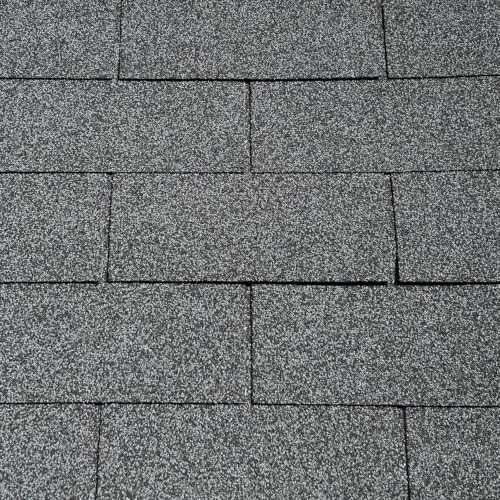
Shingle tier is the single largest cost lever. 3-tab shingles, the lightest asphalt product, install at $3.43–$4.65/sqft but carry only 15–20-year lifespans and 60 mph wind ratings. Architectural shingles install at $5.50–$8/sqft with 25–30-year lifespans and 110–130 mph wind ratings, and they are now the default spec for insurance replacements and most HOAs. The table below translates those per-sqft rates into full-roof totals for a 2,000 sqft home so you can sanity-check local bids.
| Shingle Type | Typical Low | Typical High |
|---|---|---|
| 3-tab | $5,700 | $9,500 |
| Architectural (standard) | $9,000 | $14,500 |
| Architectural (premium / Class 4) | $12,500 | $18,000 |
Asphalt pricing is up roughly 12% since 2023 from labor and material inflation. Any benchmark you carry from a 2022 re-roof is already $1,000+ stale on the same footprint.
Most homeowner confusion lives in this single decision. 3-tab shingles win on upfront price — typically 30–50% cheaper than architectural — but lose on lifespan, wind rating, and warranty coverage. On a 2,000 sqft roof, the upfront savings of choosing 3-tab over standard architectural is roughly $3,300–$5,000, but the product is rated for 15–20 years against architectural’s 25–30. Amortized over useful life, architectural usually comes out cheaper per year and carries a manufacturer warranty 2–3x longer.
Wind rating is the second lever. 3-tab is rated to about 60 mph; architectural laminated shingles land at 110–130 mph and impact-resistant Class 4 products can earn a 5–25% homeowners-insurance discount in hail-prone states like Texas, Oklahoma, and Missouri. 3-tab still makes sense for short-hold rentals, fix-and-flip projects under 3-year horizons, and budget replacements where the owner will not be around for the second life cycle.
| Spec | 3-tab | Architectural |
|---|---|---|
| Installed cost ($/sqft) | $3.43–$4.65 | $5.50–$8.00 |
| Life expectancy | 15–20 yrs | 25–30 yrs |
| Wind rating | ~60 mph | 110–130 mph |
| 2,000 sqft total | $5,700–$9,500 | $9,000–$18,000 |
If you plan to hold the home 10+ years, architectural pays back: it costs 30–50% more installed but lasts roughly 50% longer, and insurers increasingly discount Class 4 impact shingles in hail corridors.
Two identical 2,000 sqft homes on the same street can land asphalt quotes $4,000–$5,000 apart, and the variance is never random. Labor alone runs 60–70% of total cost at $2–$3 per sqft, and regional labor rates swing 20–30% between the cheapest Plains markets and the most expensive coastal ones. Pitch, tear-off, decking, and permits pile on top of that base labor.
Use the list below to audit any bid. If a contractor’s quote is missing a line for any of these items, it is either baked into material markup or excluded entirely — and the cost will reappear as a change order mid-job. Pair this list with the roof pitch calculator before collecting bids so you know up front whether your slope triggers the steep-roof premium.
Always budget a 10% decking contingency on top of the base quote. Rotten plywood is invisible until shingles come off, and a mid-job $1,500–$2,500 change order is the most common asphalt roofing budget blow-up.
A clean asphalt shingle quote decomposes into four buckets on an average $9,500 job: labor 65% ($6,175), shingles and underlayment 25% ($2,375), tear-off and disposal 5% ($475), and permits plus flashing and vents 5% ($475). Labor is the single largest line because asphalt roofing is a 2–3 day job for a 3–4 person crew at $2–$3/sqft. Materials on a 2,000 sqft roof typically cover 22–25 bundles of architectural shingles, 4–5 rolls of synthetic underlayment, 2–3 rolls of ice-and-water shield, drip edge on every eave, and new ridge vent.
Ice-and-water shield is required by code on eaves in cold climates (first 24+ inches up from the edge, plus valleys and around penetrations). Ridge vent and matched soffit vents are required by most manufacturer warranties — skip them and the shingle warranty voids. Every one of those items should appear as a discrete line in the quote, not hidden under “materials”. When you get three bids, re-cast each one into these four buckets — outlier labor share (below 50% or above 70%) is the single clearest tell that someone is either cutting corners or padding.
Asphalt roofing attracts more door-knocking storm-chaser scams than almost any other trade, because the ticket sizes ($5,700–$18,000) are large enough to be worth stealing and small enough that homeowners rarely call lawyers. The single most important rule: legitimate deposits cap at 10–20% of the contract, max $1,000 for smaller jobs. On a $9,500 re-roof that is $950–$1,900 max. Anyone demanding 50%+ upfront, or full payment before work starts, is following a documented scam pattern.
Beyond the deposit rule, the FTC fined Angi’s subsidiary HomeAdvisor in 2023 for deceptive lead-quality claims — a useful reminder that any platform-sourced contractor still needs independent vetting. Get three written bids from licensed, insured, locally based roofers with a permanent address (not just a PO box or truck signage). If a roofer offers to “waive your deductible” or “eat your deductible”, walk away immediately — that is insurance fraud and homeowners have been held liable alongside the contractor.
Ask any asphalt roofer for proof of license, general liability certificate, and workers’ comp certificate before signing. If they will not produce all three, the real cost of their bid is whatever lawsuit lands in your lap after an injury or defect — not the number on the paper.
Not every asphalt roof needs full replacement. Localized damage under 30% of the roof area on shingles less than 15 years old almost always favors targeted repair: typical cost $360–$1,750 with an average of about $960, versus a $5,700–$18,000 replacement. The decision walks in the same order an adjuster follows, starting with age and damage scope and ending with the insurance path. Pair this with the home renovation estimator if you are also pricing siding, gutters, or attic insulation — bundling trades often unlocks 5–10% mobilization discounts.
Insurance coverage is the final wildcard. Homeowners policies cover sudden events (hail, wind, falling trees) but not age-based wear. Actual Cash Value policies deduct depreciation, which can cut a $9,500 payout by 30–60% on a 15-year-old roof. Replacement Cost Value policies cost 10–25% more per month but pay full new-roof cost — worth the premium if your roof is already 10+ years old. Document every shingle crease and gutter dent with photos before any tarp work so the adjuster sees the full scope.
A $900 repair on a 12-year-old asphalt roof almost always beats a $10,500 full replacement — unless you are selling within 24 months, where a new roof recoups 60–68% of cost at resale (Remodeling Cost vs Value 2025).
Age check
Under 15 years with a localized issue: lean toward repair. 20+ years with multiple issues: plan a replacement.
Damage scope
Under 30% of roof area and a single identifiable leak source: repair. Widespread granule loss or multiple leaks: replace.
Decking and layers
Visible decking sag or two existing shingle layers forces a full tear-off by code — repair is off the table.
Insurance path
Document damage with photos before any tarp work, file a claim only for sudden-event damage, skip the claim for age-based wear.
Collect three bids
Whether repairing or replacing, get three written quotes and apply the 10–20% deposit cap rule before signing.
Read our guide
Read our guide
Read our guide
Price materials and labor for roofing, siding, decks, concrete, and more remodeling projects.
Last Updated: Oct 3, 2026
This calculator is provided for informational and educational purposes only. Results are estimates and should not be considered professional financial, medical, legal, or other advice. Always consult a qualified professional before making important decisions. UseCalcPro is not responsible for any actions taken based on calculator results.