UseCalcPro
Home
MathFinanceHealthConstructionAutoPetsGardenCraftsFood & BrewingToolsSportsMarineEducationTravel
Blog
  1. Home
  2. Construction

Bathroom Fan CFM Calculator

Find the right exhaust fan size for proper bathroom ventilation

Recommended CFM

120 CFM

Min. Required

100 CFM

Duct Size

6"

Noise Level

2.0–3.0 sones

ft
ft
ft
Room area: 40 sq ft | Volume: 320 cu ft

Fan Size Required

120 CFM
Recommended (with 20% margin)
Min. Required
100 CFM
Air Changes/Hr
22.5

Sizing Methods Comparison

Area Method
1 CFM per sq ft (min 50)
50 CFM
Fixture Method
Sum of fixture CFM values
100 CFM
The higher value (Fixture Method) determines the minimum requirement.

Duct & Noise Specs

Duct Diameter6"
Max Duct Run50 ft
Target Sone Rating2.0–3.0 sones
Moderate — noticeable but acceptable

Sone Rating Guide

< 1.0Very Quiet \u2014 Library quiet
1.0–2.0Quiet \u2014 Refrigerator hum
2.0–3.0Moderate \u2014 Normal conversation
3.0+Loud \u2014 TV volume

What You'll Need

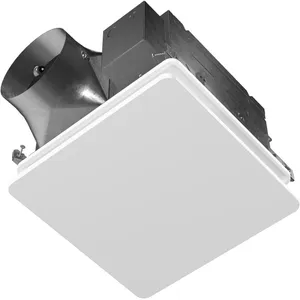
Broan-NuTone EVOLVE Exhaust Fan 50-80-110 Selectable CFM

Broan-NuTone EVOLVE Exhaust Fan 50-80-110 Selectable CFM

$80-$1204.5
View on Amazon
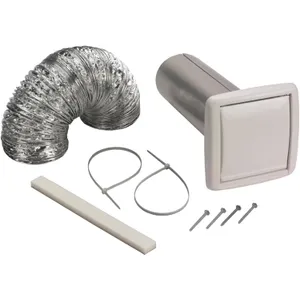
Broan-NuTone Wall Ducting Kit 4" 9-Piece Flexible

Broan-NuTone Wall Ducting Kit 4" 9-Piece Flexible

$12-$184.4
View on Amazon
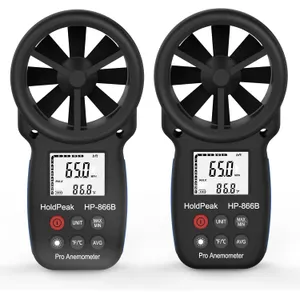
HoldPeak 866B Digital Anemometer Wind Speed Meter

HoldPeak 866B Digital Anemometer Wind Speed Meter

$58-$664.6
View on Amazon
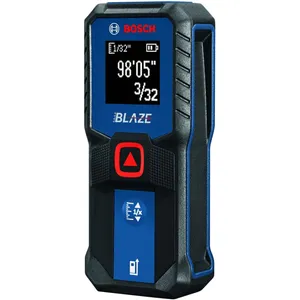
BOSCH GLM20 Blaze 65ft Laser Distance Measure

BOSCH GLM20 Blaze 65ft Laser Distance Measure

$30-$504.6
View on Amazon
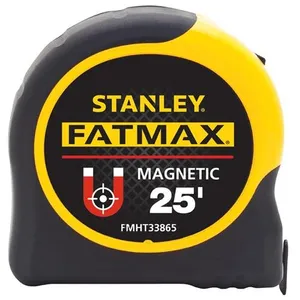
Stanley FatMax 25ft Magnetic Tape Measure

Stanley FatMax 25ft Magnetic Tape Measure

$20-$304.6
View on Amazon
Broan-NuTone EVOLVE Exhaust Fan 50-80-110 Selectable CFM

Broan-NuTone EVOLVE Exhaust Fan 50-80-110 Selectable CFM

$80-$1204.5
View on Amazon
Broan-NuTone Wall Ducting Kit 4" 9-Piece Flexible

Broan-NuTone Wall Ducting Kit 4" 9-Piece Flexible

$12-$184.4
View on Amazon
HoldPeak 866B Digital Anemometer Wind Speed Meter

HoldPeak 866B Digital Anemometer Wind Speed Meter

$58-$664.6
View on Amazon
BOSCH GLM20 Blaze 65ft Laser Distance Measure

BOSCH GLM20 Blaze 65ft Laser Distance Measure

$30-$504.6
View on Amazon
Stanley FatMax 25ft Magnetic Tape Measure

Stanley FatMax 25ft Magnetic Tape Measure

$20-$304.6
View on Amazon

As an Amazon Associate, we earn from qualifying purchases.

Frequently Asked Questions

Q

How many CFM do I need for my bathroom fan?

For bathrooms under 100 sq ft, use 1 CFM per square foot with a minimum of 50 CFM. For larger bathrooms, add CFM per fixture: 50 CFM each for toilets, showers, and bathtubs, and 100 CFM for jetted tubs. Use whichever method gives the higher number.

  • Half bath (20–40 sq ft): 50 CFM minimum even though area math gives a lower number
  • Standard bathroom (40–80 sq ft with shower + toilet): 100–120 CFM recommended
  • Master bath (100–150 sq ft with jetted tub): 200–240 CFM recommended
  • Always add a 20% safety margin to account for duct friction, elbows, and real-world conditions
Q

What sone rating should I look for in a bathroom fan?

For a quiet bathroom fan, look for models rated below 1.0 sones. Fans rated 1.0–2.0 sones are considered quiet and suitable for most bathrooms. Anything above 3.0 sones is noticeably loud. HVI-certified fans provide accurate sone ratings you can trust.

  • 0.3–0.5 sones: nearly silent, ideal for master bathrooms and night use ($80–$200)
  • 1.0–2.0 sones: comparable to a quiet refrigerator, good for most bathrooms ($40–$100)
  • 3.0–4.0 sones: as loud as normal conversation, acceptable for guest or utility bathrooms
  • DC motor fans are 50–70% quieter than AC motor fans at the same CFM rating
  • Panasonic WhisperCeiling and Broan Roomside models are popular ultra-quiet options under 0.5 sones
Sone RatingNoise LevelComparable To
0.3–0.5Near-silentRustling leaves
1.0Very quietQuiet refrigerator
2.0QuietBackground office noise
3.0–4.0NoticeableNormal conversation
Q

What size duct do I need for a bathroom exhaust fan?

Duct size depends on CFM: fans up to 50 CFM use 4-inch ducts, 50–150 CFM use 6-inch ducts, and fans over 150 CFM require 8-inch ducts. Never reduce duct size below the fan outlet—it increases noise and reduces airflow. Use rigid or semi-rigid duct when possible.

  • Rigid metal duct delivers 100% of rated CFM; flexible duct loses 10–30% due to ribbed interior
  • Each 90° elbow in the duct run reduces airflow equivalent to adding 5–8 ft of straight duct
  • Maximum recommended duct run: 50 ft for 6" duct, 75 ft for 8" duct (with 2 or fewer elbows)
  • Insulate ductwork in unconditioned spaces (attic, crawlspace) with R-6 insulation to prevent condensation
Fan CFMMin. Duct SizeMax Duct Run
Up to 50 CFM4"25 ft
50–150 CFM6"50 ft
150–300 CFM8"75 ft
Q

Does building code require a bathroom exhaust fan?

Most building codes (IRC Section R303) require either a window that opens (at least 3 sq ft) or a mechanical exhaust fan in bathrooms. Fans must be vented to the outside—never into an attic or soffit. Many jurisdictions now require fans in all bathrooms regardless of windows.

  • IRC R303.3 requires mechanical ventilation of 50 CFM intermittent or 20 CFM continuous in all bathrooms
  • ASHRAE 62.2 recommends continuous whole-house ventilation in addition to spot ventilation
  • Venting into an attic causes mold, rot, and can void your home insurance; always vent through the roof or wall
  • Permit may be required for new fan installation; check local building department rules
Q

What is HVI certification and why does it matter?

HVI (Home Ventilating Institute) certification means a fan has been independently tested for actual airflow (CFM) and noise (sones). Non-certified fans often deliver 40–60% less airflow than advertised. Always choose HVI-certified fans to ensure you get the rated performance.

  • HVI tests at 0.25" static pressure (realistic installed duct resistance), not open-air conditions
  • A fan advertised at 110 CFM may deliver only 50–70 CFM installed without HVI testing
  • Look up any fan’s certified ratings at hvi.org/proddirectory before purchasing
  • ENERGY STAR bathroom fans must be HVI-certified and use at least 60% less energy than standard models
Q

How long should a bathroom fan run after a shower?

Run your bathroom fan for at least 20 minutes after showering to fully remove moisture. A humidity-sensing fan or timer switch automates this. For bathrooms without windows, consider running the fan continuously at a low speed (20–50 CFM) for background ventilation.

  • A 10-minute shower adds about 0.5 pints of moisture to the air; a bath adds slightly less
  • Timer switches cost $15–$30 and replace standard wall switches in 15 minutes (no new wiring)
  • Humidity-sensing fans automatically turn on above 60% RH and off below 50% RH ($100–$180)
  • Continuous-run fans at 20 CFM cost only $8–15 per year in electricity and prevent mold year-round

Find a Contractor Near You

Get free quotes from licensed contractors in your area

Angi
Angi4.7/5

Verified reviews & background checks

Get Free Quotes

Showing results for your area

Example Calculations

1Small Standard Bathroom

Inputs

Room Size5 × 8 ft (40 sq ft)
Ceiling Height8 ft
FixturesToilet + Shower
TypeStandard

Result

Recommended CFM120 CFM
Area Method50 CFM (minimum)
Fixture Method100 CFM
Duct Size6-inch
Max Duct Run50 ft

The fixture method (100 CFM) exceeds the area method (40 sq ft = 50 CFM minimum). With a 20% margin, a 120 CFM fan is recommended with 6-inch ductwork.

2Large Master Bathroom

Inputs

Room Size12 × 10 ft (120 sq ft)
Ceiling Height9 ft
FixturesToilet + Shower + Jetted Tub
TypeMaster

Result

Recommended CFM240 CFM
Area Method120 CFM
Fixture Method200 CFM
Duct Size8-inch
Max Duct Run75 ft

A master bath with a jetted tub (100 CFM) plus toilet and shower (50 each) requires 200 CFM minimum. With the 20% safety margin, a 240 CFM fan with 8-inch ductwork is recommended.

3Half Bath (Powder Room)

Inputs

Room Size4 × 5 ft (20 sq ft)
Ceiling Height8 ft
FixturesToilet only
TypeHalf Bath

Result

Recommended CFM60 CFM
Area Method50 CFM (minimum)
Fixture Method50 CFM
Duct Size6-inch
Max Duct Run50 ft

Both methods yield 50 CFM (the code minimum). With the 20% margin, a 60 CFM fan is recommended with 6-inch ductwork.

Formulas Used

Area Method (CFM)

CFM = Room Area (sq ft) × 1 CFM/sq ft (minimum 50 CFM)

For bathrooms under 100 sq ft, use 1 CFM per square foot of floor area with a minimum of 50 CFM.

Where:

Room Area= Length × Width of the bathroom in square feet
50 CFM= Code minimum regardless of room size

Fixture Method (CFM)

CFM = Toilet(50) + Shower(50) + Tub(50) + Jetted Tub(100)

For larger bathrooms or those with multiple fixtures, add CFM requirements for each fixture.

Where:

Toilet= 50 CFM per toilet
Shower= 50 CFM per shower
Tub= 50 CFM per bathtub
Jetted Tub= 100 CFM per jetted/whirlpool tub

Recommended CFM

Recommended = max(Area CFM, Fixture CFM) × 1.2

Take the higher result from both methods and add a 20% safety margin for duct friction losses and real-world conditions.

Where:

Area CFM= Result from the area-based method
Fixture CFM= Result from the fixture-based method
1.2= 20% safety margin for duct losses

Bathroom Exhaust Fan Sizing Guide

1

Area Method vs Fixture Method: Using the Higher Result

The area method assigns 1 CFM per square foot of floor area with a 50 CFM minimum—a 40 sq ft bathroom still requires 50 CFM. The fixture method adds 50 CFM per toilet, shower, and tub, plus 100 CFM per jetted tub. A master bath with a toilet, shower, and jetted tub totals 200 CFM by the fixture method, far exceeding the 120 CFM from the area method for a 120 sq ft room.

Always use whichever method yields the higher number, then multiply by 1.2 for a 20% safety margin that accounts for duct friction, elbows, and real-world installation losses. That master bath example becomes 200 × 1.2 = 240 CFM recommended.

For half baths (powder rooms) with just a toilet and sink, the area method typically governs: a 20 sq ft room hits the 50 CFM minimum, which equals the single-fixture allocation. With the 20% margin, a 60 CFM fan is the standard recommendation. Use the duct size calculator to match the fan’s CFM output to the correct duct diameter.

Bathroom TypeTypical SizeArea CFMFixture CFMRecommended (with 1.2×)
Half bath20–40 sq ft50 (min)5060 CFM
Standard bath40–80 sq ft50–80100120 CFM
Large bath80–120 sq ft80–120100–150150–180 CFM
Master bath (jetted tub)100–150 sq ft100–150200240 CFM
  1. 1

    Calculate area CFM

    Length × width of bathroom in sq ft. A 10 × 8 ft bathroom = 80 sq ft = 80 CFM (minimum 50).

  2. 2

    Calculate fixture CFM

    Add 50 CFM per toilet, shower, and tub; 100 CFM per jetted tub. Toilet + shower = 100 CFM.

  3. 3

    Take the higher value

    Compare area and fixture results. Use the larger number as the base CFM.

  4. 4

    Apply 1.2× safety margin

    Multiply the base by 1.2 to account for duct losses. 100 × 1.2 = 120 CFM recommended.

2

Duct Sizing and Airflow Losses

Fans up to 50 CFM can use 4" ductwork with a maximum run of 25 ft. Fans rated 50–150 CFM require 6" ducts (max 50 ft run), and fans over 150 CFM need 8" ducts (max 75 ft). Undersizing the duct by one diameter step reduces actual delivered airflow by 20–40%, essentially wasting the investment in a higher-CFM fan.

Each 90° elbow in the duct run adds the equivalent of 5–8 ft of straight duct in friction losses. A 6" duct with 3 elbows effectively behaves like a 65–74 ft run—near or over the 50 ft maximum. Reduce elbows to 2 or fewer, or upsize to 8" duct for runs with multiple turns.

Rigid metal duct delivers 100% of rated airflow, while flexible (corrugated) duct loses 10–30% due to its ribbed interior. For any run over 15 ft, rigid or semi-rigid duct pays for itself in actual CFM delivery. Insulate all ductwork in unconditioned spaces (attic, crawlspace) with R-6 wrap to prevent condensation that leads to mold and wood rot.

Fan CFMMinimum Duct SizeMax RunFlex Duct Loss
Up to 50 CFM4"25 ft15–20%
50–150 CFM6"50 ft15–25%
150–300 CFM8"75 ft10–20%

Never reduce duct size below the fan’s outlet diameter—a 6" fan connected to 4" duct loses 40%+ of its airflow and creates a loud whistling noise.

3

Sone Ratings and Noise Comparison

A fan rated at 0.3–0.5 sones is nearly silent—comparable to rustling leaves—and costs $80–$200. Most homeowners find 1.0 sones (quiet refrigerator level) perfectly acceptable for daily use at $40–$100. Anything above 3.0 sones is as loud as normal conversation and is only tolerable in utility or guest bathrooms.

DC motor fans are 50–70% quieter than AC motor fans at the same CFM rating. The Panasonic WhisperCeiling FV-0511VQ1 delivers 50–80–110 CFM at just 0.3 sones, while a comparable AC-motor fan at 110 CFM runs 2.5–3.0 sones. The $50–$100 premium for DC motors is worthwhile for master bathrooms and bedrooms with en suite baths.

HVI (Home Ventilating Institute) certification ensures that the sone rating was tested at realistic 0.25" static pressure—not open-air conditions. Non-HVI fans often advertise lower noise than actual installed performance. Check any model’s certified rating at hvi.org before purchasing.

Sone RatingNoise LevelComparable SoundTypical Price Range
0.3–0.5Near-silentRustling leaves$80–$200
1.0Very quietQuiet refrigerator$60–$120
2.0QuietBackground office noise$40–$80
3.0–4.0NoticeableNormal conversation$30–$60

ENERGY STAR bathroom fans must be HVI-certified and use at least 60% less energy than standard models—look for the ENERGY STAR label for both verified CFM and sone ratings.

4

HVI Certification and Code Compliance

IRC Section R303.3 requires either a window (minimum 3 sq ft of operable area) or a mechanical exhaust fan delivering at least 50 CFM intermittent or 20 CFM continuous in every bathroom. Many jurisdictions now mandate fans in all bathrooms regardless of windows—check your local code before skipping the fan.

Non-HVI-certified fans routinely deliver 40–60% less airflow than advertised. A fan claiming 110 CFM may deliver only 50–70 CFM once installed with real ductwork and static pressure. HVI tests at 0.25" static pressure, which matches typical residential installations with 10–25 ft of ductwork and 1–2 elbows.

All bathroom fans must vent to the building exterior—never into the attic, soffit, or wall cavity. Venting into the attic violates code, causes moisture damage to roof sheathing, and can void homeowner’s insurance. Run the duct to a roof cap or wall termination fitting ($15–$30) with a damper flap that prevents backdraft. Use the attic ventilation calculator to ensure the bath fan exhaust does not interfere with your attic’s intake/exhaust balance.

  • IRC R303.3: 50 CFM intermittent or 20 CFM continuous required in every bathroom without an operable window
  • ASHRAE 62.2: recommends continuous whole-house ventilation in addition to bathroom spot ventilation
  • Exhaust must terminate outside—venting into attic causes mold and violates building code
  • Timer switches ($15–$30) automate the recommended 20-minute post-shower run time
  • Humidity-sensing fans ($100–$180) auto-activate above 60% RH and shut off below 50% RH

Related Calculators

Electrical Load Calculator

Calculate home electrical load requirements

Insulation Calculator

Determine insulation needs by R-value

Square Footage Calculator

Calculate area for any room or building

Whole House Fan Calculator \u2014 CFM Sizing Tool

Calculate whole house fan CFM by home size and ceiling height. Get fan sizing, window requirements, energy savings vs AC, and installation cost estimates.

Ceiling Fan Size Calculator

Find the right ceiling fan size for any room. Get blade span, CFM rating, downrod length, and mount type recommendations based on your room dimensions.

Duct Size Calculator

Calculate HVAC duct dimensions for any CFM airflow requirement. Get round and rectangular duct sizes, air velocity, friction loss, and noise level estimates.

Related Resources

How Many Tiles Do I Need? Tile Calculator Guide for Floors & Walls

Read our guide

Electrical Load Calculator

Calculate total electrical load for your home

Insulation Calculator

Determine insulation R-value and materials needed

Square Footage Calculator

Calculate room and building square footage

Drywall Calculator

Estimate drywall sheets for your project

Explore All Construction Calculators

Discover more calculators for building, renovation, and home improvement projects.

View Construction Calculators

Last Updated: Mar 26, 2026

This calculator is provided for informational and educational purposes only. Results are estimates and should not be considered professional financial, medical, legal, or other advice. Always consult a qualified professional before making important decisions. UseCalcPro is not responsible for any actions taken based on calculator results.

UseCalcPro
FinanceHealthMath

© 2026 UseCalcPro