UseCalcPro
Home
MathFinanceHealthConstructionAutoPetsGardenCraftsFood & BrewingToolsSportsMarineEducationTravel
Blog
  1. Home
  2. Tools

Depth of Field Calculator

Find your focus range, hyperfocal distance, and near/far limits for any lens and sensor

Total Depth of Field

2.03 ft

Near Limit

9.09 ft

Far Limit

11.12 ft

mm
f/
ft

Depth of Field Results

Total Depth of Field

2.03 ft

Near Limit

9.09 ft

Far Limit

11.12 ft

In Front of Subject11.0 in
Behind Subject1.12 ft
Distribution45% front / 55% back
Hyperfocal Distance97.81 ft
Infinity in Focus?No
Circle of Confusion0.03 mm

Focus Range Visualization

0 ftSubject: 10 ft11.12 ft

What You'll Need

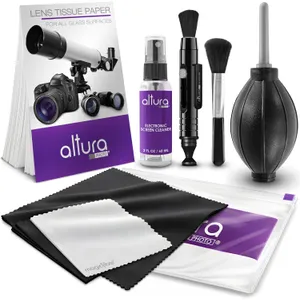
Altura Photo Camera Cleaning Kit

Altura Photo Camera Cleaning Kit

$10-$154.5
View on Amazon
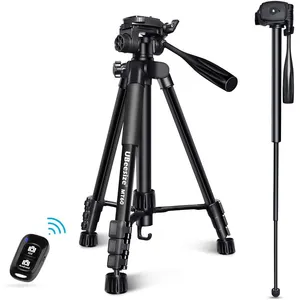
UBeesize 60" Aluminum Tripod with Phone Mount

UBeesize 60" Aluminum Tripod with Phone Mount

$25-$404.4
View on Amazon
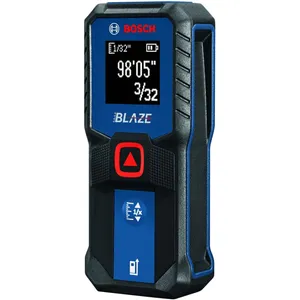
BOSCH GLM20 Blaze 65ft Laser Distance Measure

BOSCH GLM20 Blaze 65ft Laser Distance Measure

$30-$504.6
View on Amazon
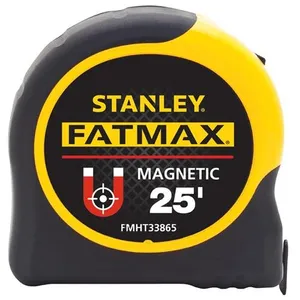
Stanley FatMax 25ft Magnetic Tape Measure

Stanley FatMax 25ft Magnetic Tape Measure

$20-$304.6
View on Amazon
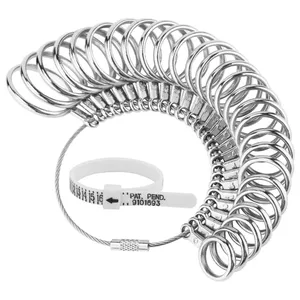
UUBAAR Ring Sizer Measuring Tool 27 PCS US Size 0-13

UUBAAR Ring Sizer Measuring Tool 27 PCS US Size 0-13

$6-$104.4
View on Amazon
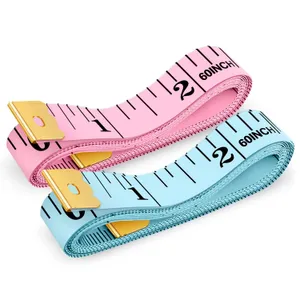
iBayam Soft Measuring Tape 60" Double Scale 2-Pack

iBayam Soft Measuring Tape 60" Double Scale 2-Pack

$5-$84.7
View on Amazon
Altura Photo Camera Cleaning Kit

Altura Photo Camera Cleaning Kit

$10-$154.5
View on Amazon
UBeesize 60" Aluminum Tripod with Phone Mount

UBeesize 60" Aluminum Tripod with Phone Mount

$25-$404.4
View on Amazon
BOSCH GLM20 Blaze 65ft Laser Distance Measure

BOSCH GLM20 Blaze 65ft Laser Distance Measure

$30-$504.6
View on Amazon
Stanley FatMax 25ft Magnetic Tape Measure

Stanley FatMax 25ft Magnetic Tape Measure

$20-$304.6
View on Amazon
UUBAAR Ring Sizer Measuring Tool 27 PCS US Size 0-13

UUBAAR Ring Sizer Measuring Tool 27 PCS US Size 0-13

$6-$104.4
View on Amazon
iBayam Soft Measuring Tape 60" Double Scale 2-Pack

iBayam Soft Measuring Tape 60" Double Scale 2-Pack

$5-$84.7
View on Amazon

As an Amazon Associate, we earn from qualifying purchases.

Frequently Asked Questions

Q

What is depth of field in photography?

Depth of field (DoF) is the distance range in a photo where objects appear acceptably sharp. A shallow DoF blurs the background (ideal for portraits), while a deep DoF keeps everything sharp (ideal for landscapes). Three factors control DoF: aperture (f-stop), focal length, and subject distance.

  • At 85mm f/1.4 on full-frame, DoF at 10 ft is only ~3.5 inches – ideal for isolating a portrait subject
  • At 24mm f/11 on full-frame, DoF can stretch from 4 ft to infinity for landscapes
  • Moving closer to your subject narrows DoF more than changing aperture by one stop
  • Longer focal lengths compress perspective and produce thinner DoF at the same distance
Q

What is the circle of confusion and why does sensor size matter?

The circle of confusion (CoC) is the maximum blur spot size that still looks sharp to the eye. Smaller sensors crop the image more, so they need a smaller CoC to maintain the same perceived sharpness. Full-frame sensors use 0.03mm, APS-C uses 0.019–0.02mm, and Micro Four Thirds uses 0.015mm.

  • Full-frame CoC: 0.03 mm – based on an 8×10" print viewed at 10 inches
  • APS-C (Canon 1.6× crop): CoC = 0.019 mm; APS-C (Nikon/Sony 1.5×): CoC = 0.02 mm
  • Micro Four Thirds (2× crop): CoC = 0.015 mm – deepest DoF at any given aperture
  • Smartphone sensors (~6× crop): CoC ≈ 0.005 mm, which is why phone photos look sharp everywhere
SensorCoC (mm)Crop FactorDoF vs Full-Frame
Full Frame0.0301.0×Baseline (shallowest)
APS-C0.019–0.0201.5–1.6×~1.5× deeper
Micro 4/30.0152.0×~2× deeper
Q

What is hyperfocal distance and how do I use it?

Hyperfocal distance is the closest focus distance at which everything from half that distance to infinity is acceptably sharp. By focusing at the hyperfocal distance, you maximize depth of field. Landscape photographers use this technique to keep both foreground and distant mountains in sharp focus.

  • 24mm at f/11 on full-frame: hyperfocal is ~5.8 ft – everything from 2.9 ft to infinity is sharp
  • 35mm at f/8: hyperfocal is ~16 ft – sharp from 8 ft to infinity
  • Focus on the hyperfocal distance (not infinity) to maximize front-to-back sharpness
  • Use a hyperfocal distance chart or app in the field – do not guess the focus point
  • Mark the hyperfocal distance on your lens barrel with tape for quick reference in the field
Q

How does aperture affect depth of field?

A wider aperture (lower f-number like f/1.4 or f/2.8) creates a shallower depth of field with more background blur. A narrower aperture (higher f-number like f/11 or f/16) creates a deeper depth of field with more of the scene in focus. However, apertures beyond f/16 may cause diffraction softening.

  • f/1.4 to f/2.8: portrait range – backgrounds melt into creamy bokeh
  • f/5.6 to f/8: sharpest aperture for most lenses ("sweet spot" for resolution)
  • f/11 to f/16: landscape range – deep DoF while maintaining good sharpness
  • f/22 and beyond: diffraction softening reduces overall image sharpness by 10–20%
  • Each full f-stop change (e.g., f/4 to f/5.6) roughly doubles the depth of field
ApertureDoF at 10 ft (85mm FF)Best Use
f/1.4~3.5 inPortraits, subject isolation
f/2.8~8.3 inEvents, indoor photography
f/5.6~17 inGroup photos, street photography
f/11~36 inLandscapes, architecture

Example Calculations

1Portrait at f/2.8 (85mm Full Frame)

Inputs

SensorFull Frame (CoC: 0.03mm)
Focal Length85 mm
Aperturef/2.8
Subject Distance10 ft

Result

Total Depth of Field8.3 in
Near Limit9.67 ft
Far Limit10.36 ft
Hyperfocal Distance282.3 ft
Infinity in FocusNo

H = (85²)/(2.8 × 0.03) + 85 = 86,037mm. Near = 2,947mm (9.67 ft), Far = 3,157mm (10.36 ft). DoF = 211mm (8.3 in). Shallow DoF isolates the subject with background blur.

2Landscape at f/11 (24mm Full Frame)

Inputs

SensorFull Frame (CoC: 0.03mm)
Focal Length24 mm
Aperturef/11
Subject Distance15 ft

Result

Total Depth of Field∞ (infinity)
Near Limit4.20 ft
Far Limit∞
Hyperfocal Distance5.81 ft
Infinity in FocusYes

H = (24²)/(11 × 0.03) + 24 = 1,769mm (5.81 ft). Since subject at 15 ft exceeds hyperfocal (5.81 ft), far limit extends to infinity. Everything from 4.20 ft to infinity is in focus.

Formulas Used

Hyperfocal Distance

H = (f²) / (N × c) + f

The closest focus distance where everything from H/2 to infinity is acceptably sharp.

Where:

f= Focal length in millimeters
N= F-number (aperture)
c= Circle of confusion in millimeters (depends on sensor size)

Near Focus Limit

Dn = (H × s) / (H + (s − f))

The closest distance that appears acceptably sharp at the current focus distance.

Where:

H= Hyperfocal distance
s= Subject (focus) distance
f= Focal length

Far Focus Limit

Df = (H × s) / (H − (s − f))

The farthest distance that appears sharp. Equals infinity when the subject distance equals or exceeds the hyperfocal distance.

Where:

H= Hyperfocal distance
s= Subject (focus) distance
f= Focal length

Understanding Depth of Field in Photography

1

How Aperture, Focal Length, and Distance Interact

A 50mm lens at f/2.0 focused on a subject 6 feet away on a full-frame sensor produces only 4.7 inches of sharp depth. Switch to f/8.0 and the zone widens to 20 inches. Move the subject to 15 feet at f/8.0 and the depth of field expands to over 12 feet. All three variables—aperture, focal length, and subject distance—interact multiplicatively, so changing any one of them can dramatically alter the look of your image.

Focal length has a stronger practical effect than many photographers realize. Shooting the same headshot with a 50mm at 4 feet versus an 85mm at 7 feet (equivalent framing) results in roughly 40% less depth of field with the 85mm. This is why portrait lenses tend to be 85–135mm: they naturally produce subject isolation without needing extreme apertures.

Distance is the easiest variable to adjust in the field. Moving from 5 feet to 10 feet at the same aperture and focal length roughly quadruples the depth of field. Macro photographers shooting at 1:1 magnification at 12 inches may have less than 1mm of usable sharpness—which is why focus stacking is essential for close-up work.

Focal LengthApertureDistanceDoF (Full Frame)
50mmf/2.06 ft4.7 in
50mmf/8.06 ft20 in
85mmf/2.88 ft5.1 in
24mmf/1110 ft15.3 ft
2

Hyperfocal Distance: Maximizing Landscape Sharpness

At 35mm f/8 on full frame, the hyperfocal distance is 13.8 feet. Focus at that point and everything from 6.9 feet to infinity is acceptably sharp—no need to focus on the distant mountains. This single technique eliminates the most common landscape photography mistake: focusing on infinity and losing foreground sharpness.

The hyperfocal distance shifts dramatically with aperture. At 35mm f/16, it drops to 7.0 feet (sharp from 3.5 ft to infinity), but at f/5.6 the hyperfocal jumps to 19.8 feet. Photographers often stop down to f/11 or f/16 for landscapes, but going beyond f/16 introduces diffraction softening that offsets the depth of field gain. The sweet spot for most lenses is f/8–f/11.

On an APS-C sensor, the same 35mm lens at f/8 has a hyperfocal distance of about 21 feet—further than full frame because the smaller circle of confusion demands finer resolution. However, to match the field of view of 35mm on full frame, you would use a 23mm lens, which has a hyperfocal distance of only 9.3 feet at f/8. Use the screen size calculator to check your display resolution for evaluating sharpness on screen.

Focus at the hyperfocal distance, not infinity. At 24mm f/11 on full frame, this puts the sharp zone from 2.9 ft to infinity—covering both your foreground rocks and the distant horizon.

3

Sensor Size and Circle of Confusion Explained

The circle of confusion (CoC) standard for full-frame sensors is 0.030mm, based on viewing an 8×10-inch print at 10 inches. APS-C sensors use 0.019–0.020mm because the smaller sensor requires a higher magnification to produce the same print, making blur spots more visible. Micro Four Thirds sensors use 0.015mm, and smartphone sensors with 6× crop use roughly 0.005mm.

This difference explains why phone photos look sharp everywhere: the tiny sensor and wide-angle equivalent lens produce enormous depth of field. A phone at f/1.8 has an effective DoF equivalent to about f/11 on full frame. Conversely, medium format cameras (CoC 0.043mm) produce shallower depth of field than full frame at the same field of view, which is why fashion photographers prize them for ultra-creamy backgrounds.

For critical work like large prints or pixel-peeping on 4K displays, some photographers halve the CoC standard (0.015mm on full frame) to ensure sharpness holds up under close inspection. This doubles the calculated hyperfocal distance and halves the depth of field, requiring narrower apertures or focus stacking for demanding applications.

Sensor FormatCoC (mm)DoF at 85mm f/2.8, 8 ft
Medium Format0.0433.2 in
Full Frame0.0305.1 in
APS-C0.0207.5 in
Micro 4/30.01510.1 in

Related Calculators

Screen Size Calculator

Calculate display PPI and dimensions

Unit Converter

Convert between measurement units

Electricity Cost Calculator

Estimate electricity usage and costs

Hyperfocal Distance Calculator \u2014 Maximum Depth of Field for Any Lens

Calculate hyperfocal distance and depth of field for any lens. Enter focal length, aperture, and sensor size to find where to focus for maximum sharpness.

Panorama Calculator \u2014 Shots Needed, Overlap & Final Resolution

Calculate how many shots you need for a panorama. Enter focal length, sensor size, total angle, and overlap percentage to plan your panoramic photography.

Exposure Calculator \u2014 Aperture, Shutter Speed & ISO Triangle

Calculate exposure value from aperture, shutter speed, and ISO. See EV, light level classification, and equivalent exposure settings for any scenario.

Related Resources

Screen Size Calculator

Calculate display PPI, dimensions, and aspect ratio

Unit Converter

Convert between measurement units

Percentage Calculator

Calculate percentages quickly

More Utility Tools

Explore other everyday calculators and converters

View All Tools

Last Updated: Mar 26, 2026

This calculator is provided for informational and educational purposes only. Results are estimates and should not be considered professional financial, medical, legal, or other advice. Always consult a qualified professional before making important decisions. UseCalcPro is not responsible for any actions taken based on calculator results.

UseCalcPro
FinanceHealthMath

© 2026 UseCalcPro