Siding Installation Cost by Material and Labor: 2026 Guide
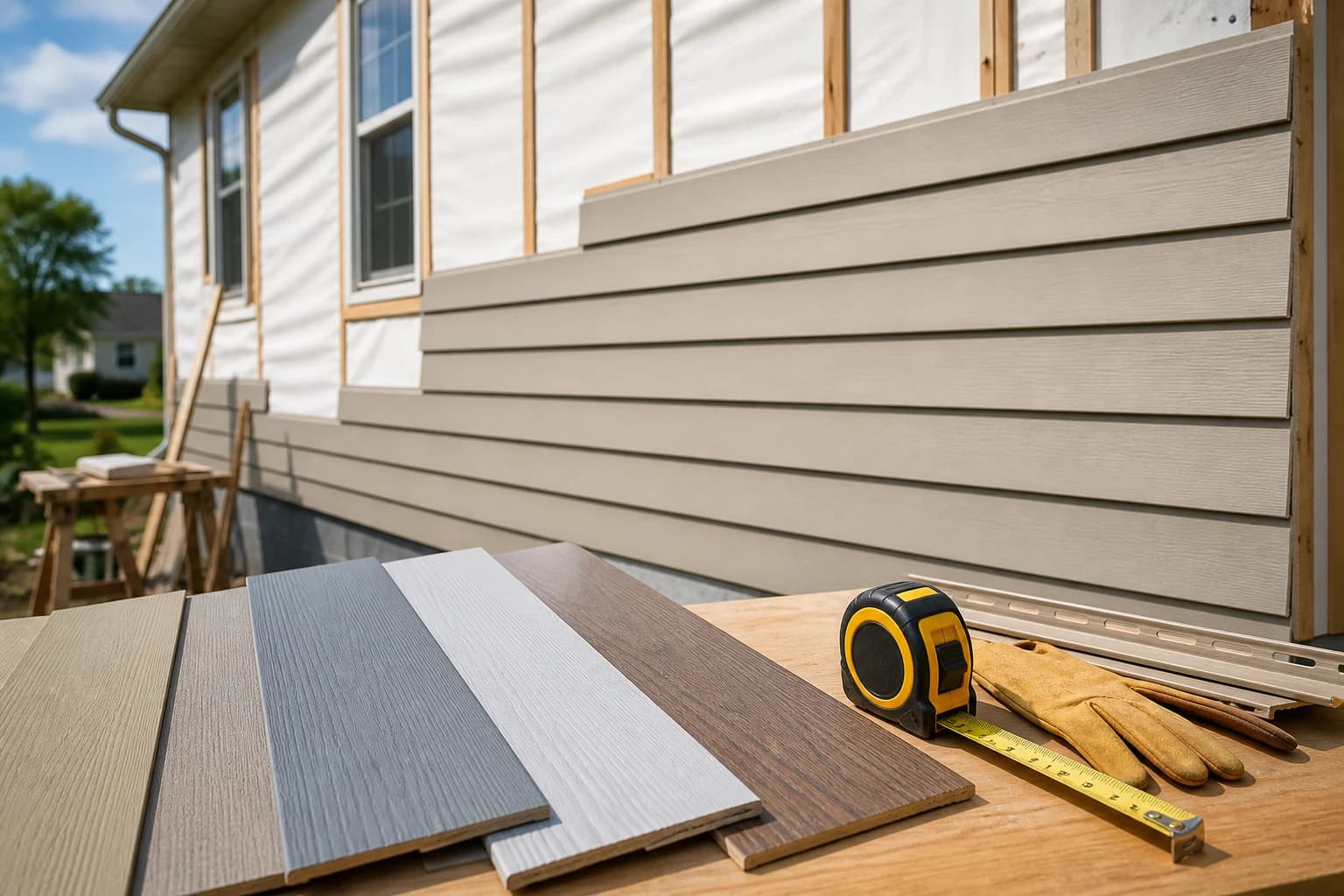
Siding installation cost by material and labor in 2026 ranges from about $4-$9 per square foot for vinyl, $6-$14 for fiber cement, $7-$16 for wood, and $8-$30 for brick veneer or masonry-style siding. Labor commonly makes up 35-60% of the installed price, with tear-off, trim, housewrap, stories, and regional wage rates moving the final quote. Use the Siding Installation Cost Calculator to price your wall area, material, stories, and region.
The mistake homeowners make is comparing material prices at the store to installed bids. A $2.50-per-square-foot vinyl panel does not become a $2.50 siding job. You still need tear-off, disposal, starter strips, corners, J-channel, flashing, housewrap, fasteners, trim labor, ladders or scaffolding, and crew time. A 1,800-square-foot siding surface that looks like $4,500 in material can easily become a $12,000-$18,000 installed project.
This guide breaks the quote into material and labor. For a broader consumer-facing estimate, see How Much Does Siding Cost in 2026?. For material-specific calculators, compare Vinyl Siding Cost, Fiber Cement Siding Cost, Wood Siding Cost, and Brick Siding Cost.
Siding Cost by Material
Material choice sets the base range. Labor then adjusts based on weight, cutting difficulty, trim complexity, and installation speed.
| Siding Material | Material Cost / Sq Ft | Labor / Sq Ft | Installed Cost / Sq Ft |
|---|---|---|---|
| Vinyl | $2-$5 | $2-$4 | $4-$9 |
| Insulated vinyl | $4-$8 | $3-$5 | $7-$13 |
| Fiber cement | $3-$7 | $3-$7 | $6-$14 |
| Engineered wood | $3-$8 | $3-$6 | $6-$14 |
| Cedar / wood | $4-$10 | $3-$8 | $7-$16 |
| Brick veneer | $5-$15 | $5-$15 | $10-$30 |
| Stucco | $5-$10 | $3-$8 | $8-$18 |
Vinyl is cheapest because it is light, fast to cut, and familiar to crews. Fiber cement costs more because boards are heavier, dustier to cut, and slower to install. Brick veneer and masonry-style products cost the most because labor is specialized and wall preparation matters.
Labor Cost by Material
Labor is not one number. It changes with material weight, crew skill, safety setup, and detail work.
| Material | Labor Difficulty | Why |
|---|---|---|
| Vinyl | Low to moderate | Lightweight, fast cuts, common system |
| Insulated vinyl | Moderate | Bulkier panels, more careful fitting |
| Fiber cement | Moderate to high | Heavy boards, silica dust control, slower cuts |
| Wood | Moderate to high | Priming, sealing, alignment, finish details |
| Brick veneer | High | Masonry skill, mortar, support details |
Labor also rises on two-story houses, steep lots, tight side yards, and homes with many windows, corners, dormers, gables, and trim transitions. A simple rectangular ranch is cheaper per square foot than a tall Victorian with dozens of cut lines.
Worked Example: 1,800 Square Feet
Assume a home has 1,800 square feet of siding surface after subtracting large openings. Compare three materials.
| Material | Installed Rate | Estimated Cost |
|---|---|---|
| Vinyl | $4-$9/sq ft | $7,200-$16,200 |
| Fiber cement | $6-$14/sq ft | $10,800-$25,200 |
| Wood | $7-$16/sq ft | $12,600-$28,800 |
If the contractor also removes old siding at $1-$2.50 per square foot, add $1,800-$4,500. If housewrap, flashing, and trim repairs add another $1.25 per square foot, add $2,250. That is how a mid-range project moves from a simple square-foot estimate to a real quote.
Tear-Off, Disposal, and Prep
Tear-off is often separated because some homes can be sided over existing material and others cannot. Siding over old material may save money, but it can hide rot, flatten trim details, and create moisture problems if the wall assembly is wrong.
| Prep Line | Typical Cost |
|---|---|
| Old siding removal | $1-$2.50/sq ft |
| Disposal / dumpster | $300-$900 |
| Housewrap | $0.30-$0.75/sq ft |
| Flashing repairs | $200-$1,500+ |
| Rotten sheathing repair | $50-$120 per sheet |
| Trim replacement | $3-$12 per linear ft |
If a bid is far below the others, check whether tear-off and disposal are included. A cheap siding bid that excludes tear-off may become average once change orders begin.
Material and Labor Split
The split depends on product type. Vinyl may be close to half material and half labor. Fiber cement and wood tilt more toward labor because handling and detail work are slower.
| Installed Project | Material Share | Labor / Prep Share |
|---|---|---|
| Basic vinyl | 45-55% | 45-55% |
| Insulated vinyl | 50-60% | 40-50% |
| Fiber cement | 35-50% | 50-65% |
| Wood siding | 35-50% | 50-65% |
| Brick veneer | 30-45% | 55-70% |
This matters when choosing upgrades. A premium vinyl color may add less labor than switching to fiber cement. But a complex trim package adds labor regardless of material.
Regional Labor and Crew Cost
Regional labor can move the quote 20-40%. High-cost coastal metros, strict permitting areas, and regions with scarce siding crews price higher. Rural areas may have lower hourly wages but higher travel charges or fewer specialist crews.
| Region Type | Labor Adjustment |
|---|---|
| Lower-cost rural / small metro | -10% to -20% |
| Average suburb | Baseline |
| High-cost metro | +20% to +40% |
| Remote or difficult access | +10% to +30% |
Seasonality matters too. Spring and early summer fill quickly. If your project can wait until slower shoulder months, contractors may price more aggressively, especially for simpler vinyl jobs.
Trim, Corners, and Detail Labor
Trim is where many siding estimates lose accuracy. The wall field may be simple, but every window, door, corner, gable, meter box, hose bib, light fixture, and penetration needs detail work. Labor around these details can take more time than installing long straight runs of siding.
| Detail | Cost Effect | Why |
|---|---|---|
| Many windows | Higher labor | More J-channel, flashing, cuts |
| Gables | Higher labor | Ladder/scaffold work and angled cuts |
| Corners | Moderate | Corner posts or trim boards |
| Shutters / fixtures | Moderate | Remove and reinstall |
| Rotten trim | High | Carpentry before siding |
| Historic details | High | Custom trim and preservation constraints |
A quote based only on square footage can underprice a detailed house. Ask the contractor how many openings are included and whether trim replacement is priced separately. If one bid includes PVC trim and another reuses old trim, they are not the same scope.
Siding Over Existing Siding
Some contractors offer to install new siding over old siding to save tear-off cost. This can work in limited cases, but it is not automatically the best choice. The wall must be flat, dry, structurally sound, and compatible with the new system. Any trapped moisture or hidden rot remains hidden.
Pros:
- Saves $1-$2.50 per square foot in tear-off.
- Reduces disposal cost.
- Shortens project time.
Cons:
- Hides sheathing damage.
- Can flatten window and door trim depth.
- May void product guidance.
- Can trap moisture if the assembly is wrong.
- Adds thickness around fixtures and penetrations.
For older homes, full tear-off is often worth the cost because it exposes rot and lets the crew install housewrap and flashing correctly. For a newer, dry, flat wall, overlay may be acceptable if the manufacturer and local code allow it.
Return on Investment and Maintenance
The cheapest installed siding is not always cheapest over 20 years. Vinyl has low maintenance and low upfront cost. Wood can look excellent but needs repainting or staining. Fiber cement balances durability and curb appeal but costs more to install. Brick veneer is expensive upfront but durable when detailed correctly.
| Material | Maintenance Pattern | Long-Term Cost Note |
|---|---|---|
| Vinyl | Wash periodically | Low maintenance, can crack or fade |
| Fiber cement | Paint cycle, caulk checks | Durable, repaint every 10-15 years |
| Wood | Paint/stain and rot checks | Higher upkeep, strong aesthetic |
| Brick veneer | Mortar inspection | Durable, high install cost |
If you plan to sell soon, curb appeal and neighborhood expectations matter. If you plan to stay 20 years, maintenance burden matters more. A slightly higher installed cost can be rational if it avoids repeated repainting or repair cycles.
Also consider sequencing. If windows, gutters, soffit, fascia, or exterior electrical work are due soon, coordinate them before siding. Paying a siding crew to remove and reinstall new trim around a window replacement six months later wastes labor and risks damaging fresh material.
Sequencing is boring, but it saves real money.
Plan once, cut once, and avoid paying crews twice.
How to Compare Siding Bids
Ask each contractor to quote the same scope. The bid should list siding material, profile, square footage, tear-off, housewrap, flashing, trim, disposal, warranty, and payment schedule.
Bid checklist:
- Wall square footage and waste factor.
- Exact product line and color.
- Tear-off included or excluded.
- Housewrap and flashing details.
- Trim, corners, soffit, fascia, and window wrap.
- Rotten sheathing unit price.
- Permit and inspection handling.
- Labor warranty and manufacturer warranty.
- Deposit amount and payment milestones.
Run your measurements in the Siding Installation Cost Calculator, then compare Window Replacement Cost, House Wrap Calculator, Soffit and Fascia Cost, and Average Siding Cost by State. For adjacent exterior projects, use the Roof Replacement Cost Calculator and Gutter Calculator.
Red Flags in Siding Quotes
Low bids usually hide scope gaps, not magic efficiency. Watch for missing housewrap, vague product names, no tear-off line, no rot-repair unit price, or a contractor pushing large cash deposits.
Red flags:
- "Builder grade vinyl" with no product line.
- No proof of insurance.
- No written labor warranty.
- Deposit over 50%.
- No flashing details around windows and doors.
- Tear-off listed as "if needed" with no unit price.
- No permit responsibility stated.
The best bid is the one that makes change orders predictable. A $15,000 bid with clear rot repair pricing can be safer than a $12,000 bid that leaves every unknown for later.
Frequently Asked Questions
How much does siding installation cost by material and labor in 2026?
Siding installation costs about $4-$9 per square foot for vinyl, $6-$14 for fiber cement, $7-$16 for wood, and $10-$30 for brick veneer in 2026. Labor usually makes up 35-60% of the installed price depending on material, stories, trim, tear-off, and region.
What is the labor cost to install siding?
Siding labor usually costs $2-$4 per square foot for vinyl, $3-$7 for fiber cement, $3-$8 for wood, and $5-$15 for brick veneer or masonry-style products. Two-story homes, complex trim, steep lots, and tear-off increase labor.
Is siding material or labor more expensive?
It depends on the material. Basic vinyl can be close to 50/50 material and labor. Fiber cement, wood, and brick veneer often lean more labor-heavy because they are slower to cut, fasten, finish, or detail. Prep work and trim can also make labor the larger share.
How much does it cost to remove old siding?
Old siding removal usually costs $1-$2.50 per square foot, plus $300-$900 for disposal or dumpster costs. Rotten sheathing, damaged trim, or flashing repairs add more. Always ask whether tear-off is included in the siding quote.
Which siding material is cheapest to install?
Vinyl is usually the cheapest siding material to install because panels are light, common, and fast for crews to handle. Basic vinyl often runs $4-$9 per square foot installed. Fiber cement, wood, and brick veneer cost more because they require more labor and heavier materials.
How do I know if a siding quote is fair?
Compare at least three itemized bids with the same material, square footage, tear-off, housewrap, trim, and warranty scope. A fair quote should list product line, labor scope, disposal, rot-repair unit prices, and payment schedule. If one bid is 25% lower, check what it excludes.
This article is provided for informational and educational purposes only. Content should not be considered professional financial, medical, legal, or other advice. Always consult a qualified professional before making important decisions. UseCalcPro is not responsible for any actions taken based on the information in this article.
Try These Calculators
Estimate 2026 siding installation cost by home size, material, and region. Full-home vinyl, fiber cement, wood, and brick totals range $7,000 to $47,000.
Estimate 2026 fiber cement siding cost by home size, region, and product line. James Hardie and generic Hardie-style runs $6 to $15 per sq ft installed.
Estimate 2026 vinyl siding cost by home size, grade, and region. Builder, standard, premium, and insulated vinyl ranges $4 to $12 per sq ft installed.
Estimate 2026 wood siding cost by home size, species, grade, and region. Cedar clapboard, shake, shingle, and pine ranges $6 to $16 per sq ft installed.
Estimate 2026 soffit and fascia repair cost by linear feet, material, and rot. Vinyl, aluminum, and wood jobs typically run $600 to $6,000 nationwide.