Whole House Generator Cost: 2026 Installed Price Guide
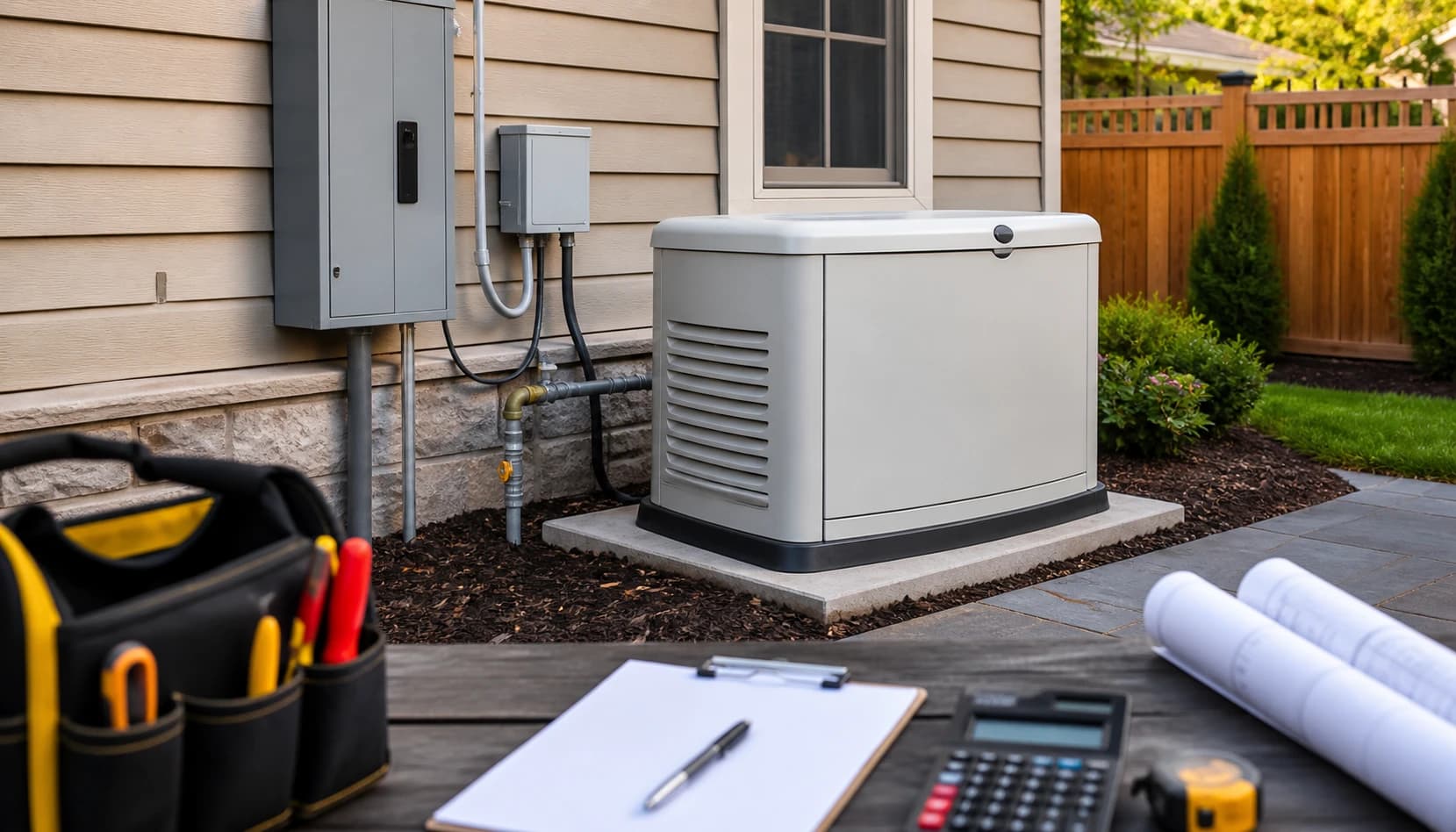
Whole house generator cost in 2026 usually runs $9,000-$20,000 installed for a typical 14kW to 26kW standby system, including the generator, automatic transfer switch, pad, electrical labor, gas hookup, permits, and startup. Smaller essential-circuit systems can land around $7,000-$12,000, while large 30kW+ or complex gas-service projects can exceed $25,000. Use the Standby Generator Install Cost Calculator to price your kW size, fuel, transfer switch, and site conditions.
The number that catches homeowners is not the generator unit; it is the installation stack. A 22kW generator advertised near $6,000 can become a $14,000 project after the transfer switch, concrete or composite pad, gas line, electrical conduit, permits, load management, startup, and two licensed trades. Bids can differ by $4,000 on the same unit when one includes gas meter coordination and the other buries it in "owner responsibility."
This article is the installed whole-house cost guide. For switch-specific pricing, see Transfer Switch Install Cost. For fuel use after installation, use the Generator Fuel Calculator.
Whole House Generator Cost by Size
Generator size is measured in kilowatts. The right size depends on whether you want essential circuits, most of the house, or true whole-home coverage with central air.
| Generator Size | Installed Cost | Typical Coverage |
|---|---|---|
| 10-12kW | $7,000-$11,000 | Essentials, small homes, managed loads |
| 14-18kW | $8,500-$14,000 | Many homes without heavy simultaneous loads |
| 20-22kW | $10,000-$18,000 | Common whole-home choice |
| 24-26kW | $12,000-$20,000 | Larger homes, central AC, more circuits |
| 30kW+ | $18,000-$30,000+ | Large homes, high loads, complex installs |
The common 22kW natural-gas system is popular because it can support many 200A homes with load management. It does not mean every appliance can start at once. Air conditioning, well pumps, electric ovens, dryers, and heat strips may still require load shedding.
Installed Cost Breakdown
A whole-house generator quote has several parts. Ask for each line separately.
| Line Item | Typical Cost |
|---|---|
| Generator unit | $4,000-$9,000 |
| Automatic transfer switch | $800-$3,500 |
| Electrical labor and materials | $1,500-$5,000 |
| Gas line / fuel hookup | $800-$3,500 |
| Pad / placement | $300-$1,200 |
| Permits and inspections | $150-$800 |
| Startup / commissioning | $200-$800 |
| Load management modules | $300-$1,500 |
The transfer switch is not optional for a standby system. It detects utility outage, starts the generator, waits for stable power, and transfers selected loads. Manual transfer systems are cheaper but are not the same as automatic whole-house standby.
22kW Generator Installed Example
Assume a 22kW natural-gas standby generator for a 2,200-square-foot home with a 200A panel.
| Line | Cost |
|---|---|
| 22kW generator | $5,800 |
| 200A automatic transfer switch | $1,800 |
| Electrical labor / conduit | $2,600 |
| Gas line and meter coordination | $1,800 |
| Pad and placement | $650 |
| Permits and inspection | $450 |
| Startup and load management | $900 |
| Total | $14,000 |
This is why unit-only shopping misleads. The generator itself is less than half the finished project. If the gas meter needs upsizing or the panel is far from the generator location, the installed total can move quickly.
Natural Gas vs Propane
Most whole-house generators run on natural gas or propane. Natural gas is convenient where available because there is no tank to refill. Propane works in rural areas but needs tank sizing and delivery planning.
| Fuel | Pros | Cost Considerations |
|---|---|---|
| Natural gas | Continuous utility supply, no tank | Meter capacity and gas line sizing |
| Propane | Works off-grid, stored onsite | Tank purchase/rental, refill logistics |
| Diesel | Efficient, durable | Less common residentially, fuel storage |
Natural gas installations often require a gas load calculation. A standby generator can demand 200+ cubic feet per hour on its own. If your meter already serves furnace, water heater, range, and dryer, the utility may need to upsize the meter. The meter upgrade may be free, but it can add weeks.
Transfer Switch and Load Management
The transfer switch determines what the generator powers. Whole-house systems often use a 100A or 200A automatic transfer switch. Load management modules prevent high-draw appliances from starting all at once.
| Setup | Typical Installed Cost Impact | Best For |
|---|---|---|
| Essential circuits | Lower | Fridge, furnace, sump, lights |
| Managed whole-home | Mid | Most homes with AC and appliances |
| Full 200A whole-home | Higher | Larger generator, fewer compromises |
| Multiple ATS / complex panels | Highest | Large homes, subpanels, outbuildings |
Load management can save money by letting a smaller generator serve a larger home intelligently. Instead of buying a 30kW unit, a homeowner may use a 22kW unit with modules that temporarily pause AC or water heating while another load starts.
Site Conditions That Add Cost
Site work is the wildcard. A clean install has the generator near the panel and gas meter, with a simple pad location and easy conduit path. A difficult install has long trenching, finished walls, panel upgrades, HOA restrictions, or tight setbacks.
| Condition | Possible Add |
|---|---|
| Long gas run | $500-$2,500 |
| Trenching | $15-$50 per foot |
| Gas meter upsize delay | Time, sometimes no direct fee |
| Panel upgrade | $2,000-$5,000+ |
| Difficult pad location | $500-$2,000 |
| HOA / sound enclosure | $300-$2,500 |
| Load management modules | $300-$1,500 |
Ask the installer to walk the route with you. Where will the generator sit? Where will conduit run? Where will the gas line run? What loads are managed? What happens if the utility requires a meter upgrade? These questions prevent quote surprises.
Annual Maintenance Cost
The installed price is not the last cost. Standby generators need maintenance so they start during an outage. A neglected generator is an expensive lawn ornament.
| Maintenance Item | Typical Cost |
|---|---|
| Annual service visit | $150-$350 |
| Oil, filter, spark plugs | $50-$150 |
| Battery replacement | $100-$250 every 3-5 years |
| Load test / inspection | Often included or $100-$250 |
| Extended warranty | $300-$1,000+ |
Many installers sell annual plans. They can be worthwhile if they include exercise testing, oil service, battery check, firmware/control check, and priority outage support. If you maintain it yourself, follow the manufacturer interval and keep records. Warranty disputes are easier when maintenance is documented.
Noise, Placement, and Permits
Placement rules can affect cost. Generators need clearance from doors, windows, vents, property lines, and combustible materials. Local codes, manufacturer instructions, and HOA rules may all apply. Moving the generator farther from the house may solve a clearance issue but add gas line and conduit cost.
Common placement constraints:
- Distance from operable windows and doors.
- Distance from dryer vents, intake vents, and AC equipment.
- Property-line setbacks.
- Flood elevation or drainage.
- Noise limits.
- Service access clearance.
Noise matters because standby units run weekly exercise cycles. A placement that is technically legal but directly below a bedroom window can become a neighbor or sleep problem. Ask the installer where the exhaust points and when exercise mode will run.
Battery Backup vs Generator
Whole-house generators are not the only backup-power option. Battery systems cost more per hour of stored energy but have no exhaust, lower noise, and can pair with solar. Generators run longer if fuel is available but require maintenance and combustion safety.
| Option | Strength | Weakness |
|---|---|---|
| Standby generator | Long runtime, automatic, handles large loads | Fuel, noise, maintenance |
| Solar battery | Quiet, clean, fast switchover | Limited runtime without solar recharge |
| Portable generator | Low upfront cost | Manual setup, limited loads |
| UPS units | Cheap for electronics | Not whole-house backup |
For multi-day outages with heating, well pump, or central air, a standby generator is hard to beat. For short outages, medical electronics, internet, and lights, a battery system may cover the real need with less maintenance.
Financing and Deposit Red Flags
Generator installs are high-ticket projects, so payment terms matter. Reputable installers often ask for a deposit when equipment is ordered, then progress or final payment after inspection/startup. A very large upfront cash demand is a red flag.
Safer payment structure:
- 10-33% deposit at contract signing.
- Equipment payment when unit is delivered.
- Final balance after inspection and startup.
- Written lien release where applicable.
Avoid any installer who refuses permits, cannot show electrical and gas licenses, will not provide insurance, or says the transfer switch is optional. Generator work touches life-safety systems. Cheap unpermitted work can create fire, carbon monoxide, backfeed, warranty, and home-sale problems.
Portable Generator vs Whole House Standby
A standby system is convenient and automatic. A portable generator is cheaper but manual.
| Option | Installed Cost | Operation |
|---|---|---|
| Portable + interlock | $800-$2,500 | Manual setup, limited loads |
| Portable + manual transfer switch | $1,500-$4,000 | Manual but cleaner circuit control |
| Standby essential circuits | $7,000-$12,000 | Automatic, selected loads |
| Whole-house standby | $9,000-$20,000+ | Automatic, broad coverage |
If outages are rare and short, a portable generator plus transfer switch may be enough. If outages are frequent, the home has a sump pump or medical equipment, or you travel often, automatic standby makes more sense.
How to Compare Generator Quotes
Get at least three written quotes. Each should list generator model, kW, transfer switch amperage, fuel type, gas line scope, load management, permit responsibility, warranty, and startup.
Quote checklist:
- Generator brand, model, and kW.
- Natural gas or propane fuel rating.
- Transfer switch amperage.
- Load calculation and load-shedding plan.
- Gas line size and meter responsibility.
- Pad type and exact placement.
- Electrical permit and gas permit.
- Startup/commissioning included.
- Maintenance plan cost.
- Deposit and payment schedule.
Run the project through the Standby Generator Install Cost Calculator, then compare Generator Sizing Calculator, Generator Fuel Calculator, Transfer Switch Install Cost, Gas Line Install Cost, and Electrical Panel Upgrade Cost. Related guides include Home Battery Backup System Installation Cost, Cost of Electrical Service Upgrade, and Whole House Water Filtration System Installation Cost.
Frequently Asked Questions
How much does a whole house generator cost in 2026?
A whole house generator usually costs $9,000-$20,000 installed in 2026 for a typical 14kW to 26kW standby system. Smaller essential-circuit systems may cost $7,000-$12,000, while large or complex installs can exceed $25,000.
How much does a 22kW generator cost installed?
A 22kW generator commonly costs $10,000-$18,000 installed depending on transfer switch, gas line, permits, pad, load management, and regional labor. The generator unit may be around $5,000-$7,000, but the finished install includes several thousand dollars of electrical and fuel work.
What is included in whole house generator installation?
Installation usually includes the generator unit, automatic transfer switch, pad, electrical conduit and wiring, gas or propane hookup, permits, inspection, startup, and load management if needed. Maintenance plans and extended warranties may be separate.
Is a whole house generator worth it?
A whole house generator is worth it when outages are frequent, the home has critical loads, or automatic backup matters. It is less compelling for homes with rare short outages. Compare the installed cost against a portable generator, battery backup, and the financial impact of losing power.
Does a whole house generator need a transfer switch?
Yes. A standby generator needs an approved transfer switch to isolate the home from the utility grid and transfer loads safely. Automatic transfer switches are standard for whole-house standby systems. Improvised backfeeding is dangerous and illegal.
What size generator do I need for my whole house?
Many homes use 18kW to 26kW standby generators, but the right size depends on square footage, central AC, heat source, well pump, electric appliances, and load management. A load calculation is the correct way to size the system. Bigger is not always better if the gas line and transfer setup cannot support it.
This article is provided for informational and educational purposes only. Content should not be considered professional financial, medical, legal, or other advice. Always consult a qualified professional before making important decisions. UseCalcPro is not responsible for any actions taken based on the information in this article.
Try These Calculators
Estimate 2026 whole-home standby generator installation cost by kW, brand, and fuel type. 22 kW natural-gas installs $9,000-$13,500; 26 kW+ $11,000-$16,000.
Estimate 2026 drywall install cost by square footage and finish level. Hang + finish runs $1.50 to $3.50 per sqft; 1,000 sqft job is $2,000 to $3,500.
Estimate 2026 generator transfer switch install cost: interlock kit $400-$900, manual TS $1,000-$2,200, automatic TS $1,800-$5,500 by amperage and circuits.
Estimate 2026 whole house water filter cost by type, home size, and water source. Basic sediment $300-$800; carbon $800-$2,000; multi-stage $2,500-$5,500.
Estimate 2026 window replacement cost by window count, frame material, and glazing. Vinyl, fiberglass, and wood windows typically run $450 to $2,500 each.