
UseCalcPro
Home
MathFinanceHealthConstructionAutoPetsGardenCraftsFood & BrewingToolsSportsMarineEducationTravel
Blog
  1. Home
  2. Construction

Board Foot Calculator

Calculate board feet, cost, and weight for lumber

Total Board Feet

4.00

BF per Piece

4.00

Boards

1

Total Cost

$20

Units
$
BF per Piece

4.00

Total Board Feet

4.00

Total Cost

$20

Cost per Piece

$20

Board Feet Breakdown

Per Piece4.00 bf
Total (1 boards)4.00 bf
Total Board Feet4.00

Cost Breakdown

Price per Board Foot$5.00
BF per Piece4.00
Cost per Piece$20
Number of Boards1
Total Cost$20

What You'll Need

Stanley FatMax 25ft Magnetic Tape Measure

Stanley FatMax 25ft Magnetic Tape Measure

$18-$254.8
View on Amazon
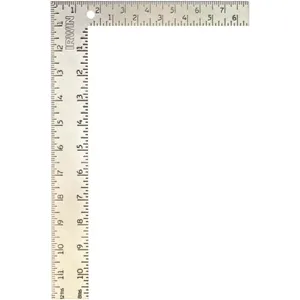
IRWIN Carpenter Square 8x12"

IRWIN Carpenter Square 8x12"

$10-$154.7
View on Amazon
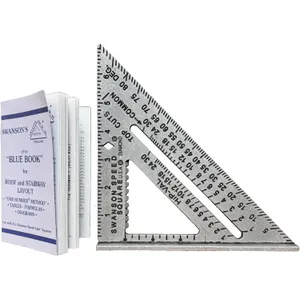
SWANSON Tool 7 Inch Speed Square Blue

SWANSON Tool 7 Inch Speed Square Blue

$8-$124.8
View on Amazon
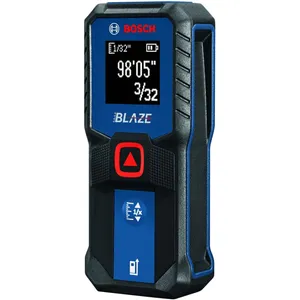
BOSCH GLM20 Blaze 65ft Laser Distance Measure

BOSCH GLM20 Blaze 65ft Laser Distance Measure

$30-$504.6
View on Amazon
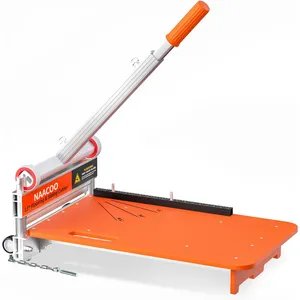
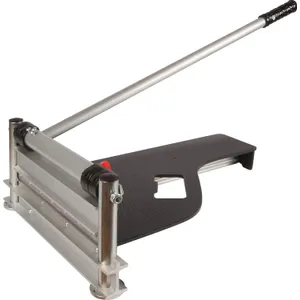
Heavy Duty Laminate Vinyl Floor Cutter 13 inch

Heavy Duty Laminate Vinyl Floor Cutter 13 inch

$125-$1354.7
View on Amazon
Roberts 13" Pro Flooring Cutter

Roberts 13" Pro Flooring Cutter

$35-$504.6
View on Amazon
Stanley FatMax 25ft Magnetic Tape Measure

Stanley FatMax 25ft Magnetic Tape Measure

$18-$254.8
View on Amazon
IRWIN Carpenter Square 8x12"

IRWIN Carpenter Square 8x12"

$10-$154.7
View on Amazon
SWANSON Tool 7 Inch Speed Square Blue

SWANSON Tool 7 Inch Speed Square Blue

$8-$124.8
View on Amazon
BOSCH GLM20 Blaze 65ft Laser Distance Measure

BOSCH GLM20 Blaze 65ft Laser Distance Measure

$30-$504.6
View on Amazon
Heavy Duty Laminate Vinyl Floor Cutter 13 inch

Heavy Duty Laminate Vinyl Floor Cutter 13 inch

$125-$1354.7
View on Amazon
Roberts 13" Pro Flooring Cutter

Roberts 13" Pro Flooring Cutter

$35-$504.6
View on Amazon

As an Amazon Associate, we earn from qualifying purchases.

Frequently Asked Questions

Q

What is a board foot?

A board foot (bf) is a unit of volume for lumber equal to 144 cubic inches, or a piece 12 inches long, 12 inches wide, and 1 inch thick. It is the standard unit used by lumber yards and hardwood dealers for pricing rough-sawn lumber.

  • 1 board foot = 144 cubic inches = 12" × 12" × 1" thick
  • Abbreviated as "bf" or "BF" in lumber yard invoices
  • Standard pricing unit for all rough-sawn hardwoods in North America
  • Dimensional lumber (2×4s, 2×6s) is sold by linear foot, not board foot
Q

How do you calculate board feet?

Board Feet = (Thickness in inches × Width in inches × Length in feet) / 12. For example, a board that is 1" thick, 6" wide, and 8 feet long contains (1 × 6 × 8) / 12 = 4.00 board feet.

  • Quick formula: T(in) × W(in) × L(ft) / 12 = board feet
  • 4/4 lumber = 1" thick, 8/4 = 2" thick, 12/4 = 3" thick (quarter notation)
  • Rough-sawn boards are measured before planing – a 4/4 board planes to ~13/16"
  • Always round up partial board feet – most yards charge per whole bf
  • Add 15–25% waste factor for jointing, planing, and cutoff allowance
Q

What is the difference between board feet and linear feet?

Linear feet measures only length, while board feet measures volume (thickness × width × length). A 1×6 board and a 2×12 board can both be 8 linear feet, but the 2×12 has 16 board feet vs. 4 board feet for the 1×6.

  • Linear foot = 1 ft of length regardless of width or thickness
  • Board foot = 1 ft × 1 ft × 1 in (accounts for all three dimensions)
  • Softwood dimensional lumber (pine, spruce) uses linear feet pricing
  • Hardwood rough-sawn lumber (walnut, oak, cherry) uses board feet pricing
  • Plywood is sold by the sheet (4×8 ft) or by the square foot, not board foot
Q

Why is hardwood lumber sold by the board foot?

Hardwood lumber comes in random widths and lengths unlike dimensional softwood (2×4s). Board feet provides a standardized volume measurement so dealers can price lumber fairly regardless of each board's unique dimensions.

  • Hardwood boards range from 3"–12"+ wide and 4–16 ft long (random)
  • Board foot pricing lets you compare walnut at $8.50/bf vs cherry at $7.25/bf directly
  • Lumber grades (FAS, #1 Common, #2 Common) affect price per board foot by 30–50%
  • FAS (First and Seconds) grade commands $2–4 more per bf than #1 Common
Q

How much does a board foot of wood weigh?

Weight varies by species. Oak averages 3.58 lbs/bf, Maple 3.75 lbs/bf, Walnut 2.88 lbs/bf, Cherry 2.92 lbs/bf, Pine 2.33 lbs/bf, Cedar 1.83 lbs/bf, and Poplar 2.50 lbs/bf. These are approximate kiln-dried densities.

  • Kiln-dried wood weighs 20–40% less than green (fresh-cut) lumber
  • A 50 bf order of oak weighs approximately 179 lbs – plan for transport
  • Cedar is lightest at 1.83 lbs/bf; maple is heaviest at 3.75 lbs/bf
  • Green oak can weigh 5+ lbs/bf – almost double the kiln-dried weight
  • Use weight estimates when planning vehicle capacity for lumber yard pickups
Wood SpeciesWeight (lbs/bf)Typical Price/bf
Red Oak3.58$4.50–$6.00
Hard Maple3.75$5.00–$7.00
Black Walnut2.88$8.00–$12.00
Cherry2.92$6.00–$8.50
Poplar2.50$3.00–$4.50

Find a Contractor Near You

Get free quotes from licensed contractors in your area

Angi
Angi4.7/5

Verified reviews & background checks

Get Free Quotes

Showing results for your area

Example Calculations

11×6 Boards for a Shelf Project

Inputs

Thickness1 in
Width6 in
Length8 ft
Number of Boards10
Price per BF$5.00

Result

Total Board Feet40.00 bf
BF per Piece4.00 bf
Total Cost$200
Cost per Piece$20

BF per piece = (1 × 6 × 8) / 12 = 4.00 bf. Total = 4.00 × 10 = 40.00 bf. Cost = 40.00 × $5.00 = $200.00.

28/4 Walnut for a Table Top

Inputs

Thickness2 in
Width8 in
Length10 ft
Number of Boards5
Price per BF$8.50
SpeciesWalnut (2.88 lb/bf)

Result

Total Board Feet66.67 bf
BF per Piece13.33 bf
Total Cost$567
Est. Total Weight192.0 lbs

BF per piece = (2 × 8 × 10) / 12 = 13.33 bf. Total = 13.33 × 5 = 66.67 bf. Cost = 66.67 × $8.50 = $566.67. Weight = 66.67 × 2.88 = 192.0 lbs.

34/4 Cherry for Cabinet Doors

Inputs

Thickness1 in
Width5 in
Length3 ft
Number of Boards12
Price per BF$7.25
SpeciesCherry (2.92 lb/bf)

Result

Total Board Feet15.00 bf
BF per Piece1.25 bf
Total Cost$108.75
Est. Total Weight43.8 lbs

BF per piece = (1 × 5 × 3) / 12 = 1.25 bf. Total = 1.25 × 12 = 15.00 bf. Cost = 15.00 × $7.25 = $108.75. Weight = 15.00 × 2.92 = 43.8 lbs.

Formulas Used

Board Feet

Board Feet = (T × W × L) / 12

Calculates the volume of a single board in board feet. Thickness and width are in inches, length is in feet.

Where:

T= Thickness in inches
W= Width in inches
L= Length in feet
12= Divisor to convert cubic inches to board feet

Total Board Feet

Total BF = BF per Piece × Number of Boards

Multiplies the board feet per piece by the number of boards to get total volume.

Where:

BF per Piece= Board feet in one board
Number of Boards= Quantity of boards

Weight Estimate

Weight = Total BF × Density (lb/bf)

Estimates total lumber weight using species-specific density data for kiln-dried wood.

Where:

Total BF= Total board feet of lumber
Density= Pounds per board foot for the selected species

Complete Guide to Board Foot Measurement and Lumber Pricing

1

Board Foot Formula and Quarter Notation Explained

One board foot equals exactly 144 cubic inches — the volume of a 12" × 12" × 1" piece of lumber. The working formula is T × W × L / 12, where thickness and width are in inches and length is in feet. A board that measures 2" thick, 8" wide, and 10 ft long contains (2 × 8 × 10) / 12 = 13.33 board feet.

Hardwood thickness uses quarter notation: 4/4 means 1" rough, 5/4 means 1.25", 6/4 means 1.5", 8/4 means 2", and 12/4 means 3". These are rough-sawn measurements before planing. A 4/4 board planes down to approximately 13/16" (0.8125"), but you pay for the full 1" thickness in board feet.

Most lumber yards round up partial board feet and charge per whole BF, so a 3.7 BF board is invoiced at 4 BF. Always round up when estimating project costs to avoid surprises at checkout. Add 15–25% waste factor for jointing, planing, and cutoff allowance.

Surfaced thickness assumes standard 3/16" removal per face
Quarter NotationRough ThicknessSurfaced (S2S)BF per 6" × 8’ Board
4/41"13/16"4.00
5/41.25"1-1/16"5.00
6/41.5"1-5/16"6.00
8/42"1-3/4"8.00
12/43"2-3/4"12.00
  1. 1

    Measure thickness in inches

    Use the nominal rough-sawn thickness (e.g., 1" for 4/4, 2" for 8/4). Do not use the surfaced thickness.

  2. 2

    Measure width in inches

    Measure at the narrowest point of the board. Random-width hardwood ranges from 3" to 12"+.

  3. 3

    Measure length in feet

    Round up to the next whole foot. A 7’6" board counts as 8 feet.

  4. 4

    Apply the formula

    Board Feet = (T × W × L) / 12. For a 4/4 board 6" wide and 8 ft long: (1 × 6 × 8) / 12 = 4.00 BF.

2

Species Weight Guide for Transport Planning

Hard maple weighs 3.75 lbs per board foot kiln-dried — making it the heaviest common domestic hardwood. A 100 BF maple order tips the scale at 375 lbs, more than most pickup truck beds handle comfortably without load distribution. Red oak (3.58 lbs/BF) is close behind, while cedar at 1.83 lbs/BF weighs less than half as much per board foot.

Green (fresh-cut) lumber can weigh 40–60% more than kiln-dried stock. A green oak board at 5+ lbs/BF means that same 100 BF order could exceed 500 lbs. Always confirm moisture content before planning transport — kiln-dried (6–8% MC) versus air-dried (12–15% MC) versus green (30%+ MC) affects weight dramatically.

Weight matters beyond transport. The beam size calculator uses species density to estimate dead load when sizing structural members, and furniture makers need weight data to ensure table bases and mounting hardware can support the finished piece.

SpeciesKiln-Dried (lbs/BF)Typical Price/BF100 BF Weight
Hard Maple3.75$5.00–$7.00375 lbs
Red Oak3.58$4.50–$6.00358 lbs
Cherry2.92$6.00–$8.50292 lbs
Black Walnut2.88$8.00–$12.00288 lbs
Poplar2.50$3.00–$4.50250 lbs
Eastern White Pine2.33$2.50–$4.00233 lbs
Western Red Cedar1.83$4.00–$6.50183 lbs

Always weigh lumber at the yard before loading. Kiln schedules vary, and a board at 10% MC weighs 5–7% more than one at 6% MC.

3

Lumber Grades and Their Impact on Price

FAS (First and Seconds) grade hardwood commands $2–$4 more per board foot than #1 Common, but yields 83%+ clear-face cuttings compared to 67%+ for #1 Common. For a walnut table top project requiring 30 BF, upgrading from #1 Common at $8.50/BF to FAS at $11.00/BF adds $75 but saves hours of sorting and reduces waste from defects.

The NHLA (National Hardwood Lumber Association) grades are based on the percentage of clear cuttings obtainable from each board’s worst face. FAS boards must be at least 6" wide and 8’ long with 83%+ clear yield. #1 Common allows boards as narrow as 3" and as short as 4’, with 67%+ clear yield. #2 Common drops to 50% clear yield.

For painted or stained projects where grain appearance matters less, #1 Common or even #2 Common can save 30–50% on material cost. The deck calculator often uses #2 grade for framing lumber where knots and minor defects are hidden beneath decking boards.

NHLA grading standards for hardwood lumber
GradeMin WidthMin LengthClear YieldPremium over #1 Common
FAS6"8’83%++$2–$4/BF
FAS One Face6"8’83%+ (one face)+$1–$3/BF
#1 Common3"4’67%+Baseline
#2 Common3"4’50%+–$1–$2/BF

Ask for FAS One Face (F1F) grade when only one side of the board will be visible — it costs 15–25% less than full FAS.

4

Buying Tips: Waste Allowance and Cost Optimization

A 15–25% waste factor is standard for hardwood projects depending on the grade purchased. With FAS lumber (83%+ clear), plan for 15% waste from jointing, planing, and end trimming. With #1 Common (67%+ clear), increase to 25% because more of each board will have defects to cut around.

Buying in bulk from a wholesale hardwood dealer typically saves $1–$3 per board foot compared to retail hobby-shop pricing. A 200 BF walnut order at $9.00/BF wholesale versus $12.00/BF retail saves $600 — enough to cover delivery fees. Many dealers offer free delivery on orders above 250–500 BF.

Before visiting the lumber yard, create a cut list with finished dimensions and add 1" to width and 2" to length for each piece to allow for jointing and trimming. Convert the total volume to board feet and apply the waste factor. This method ensures you buy exactly what you need without expensive return trips.

  • FAS grade waste factor: 15% (high clear yield, minimal defect cutting)
  • #1 Common waste factor: 20–25% (more knots and sapwood to work around)
  • Wholesale pricing saves $1–$3/BF over retail for orders above 100 BF
  • Free delivery threshold: typically 250–500 BF at most hardwood dealers
  • Always request to hand-select boards when buying fewer than 50 BF

Related Calculators

Lumber Calculator

Calculate lumber for framing projects with waste allowance

Concrete Calculator

Calculate concrete volume in cubic yards

Deck Calculator

Estimate deck materials and cost

Timber Yield Calculator \u2014 Board Feet from Logs

Calculate board feet from log diameter and length using Doyle, Scribner, or International rules. Estimate lumber yield percentage and value by species.

Pergola Calculator

Estimate pergola materials and cost by entering dimensions, post spacing, and wood type. Get post, beam, rafter counts, total board feet, and a cost breakdown.

Baseboard Calculator — Trim Estimator

Calculate linear feet of baseboard trim and boards needed for any room. Get board counts, corner pieces, waste allowance, and material cost estimates.

Related Resources

Flooring Calculator: How Much Hardwood, Laminate, or LVP Do You Need?

Read our guide

How to Build a Deck: Complete Materials & Cost Calculator Guide

Read our guide

Fence Cost Calculator: Posts, Panels & Materials for Any Yard

Read our guide

Lumber Calculator

Calculate lumber for framing projects

Concrete Calculator

Calculate concrete needed

Deck Calculator

Plan your deck materials

Flooring Calculator

Calculate flooring materials

More Construction Calculators

Plan your construction project with our full suite of tools

View All

Last Updated: Mar 26, 2026

This calculator is provided for informational and educational purposes only. Results are estimates and should not be considered professional financial, medical, legal, or other advice. Always consult a qualified professional before making important decisions. UseCalcPro is not responsible for any actions taken based on calculator results.

UseCalcPro
FinanceHealthMath

© 2026 UseCalcPro