UseCalcPro
Home
MathFinanceHealthConstructionAutoPetsGardenCraftsFood & BrewingToolsSportsMarineEducationTravel
Blog
  1. Home
  2. Construction

Concrete Calculator

Calculate concrete for any project

Units

Total Concrete Needed

1.36 yd³

Bags

62

Cost

$341

Weight

2.8 T

Add Rebar
Wire Mesh
10%
5%10% typical20%
$
Volume

1.36 yd³

Bags Needed

62

Weight

2.8 tons

Est. Cost

$341

Volume Breakdown

Raw Volume1.23 yd³
+ Waste0.12 yd³
Total Needed1.36 yd³
80 lb bag62 bags
Truck Loads (9 yd³)1

Cost Breakdown

Concrete$341
Total$341

What You'll Need

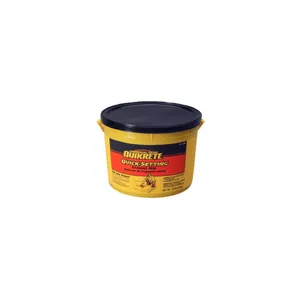
Quick Setting Cement 10lb Bag

Quick Setting Cement 10lb Bag

$10-$124.6
View on Amazon
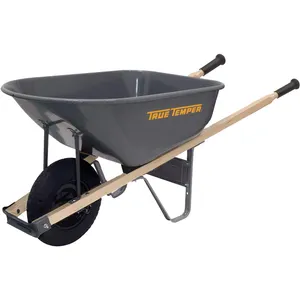
True Temper 6 Cu Ft Steel Tray Wheelbarrow

True Temper 6 Cu Ft Steel Tray Wheelbarrow

$89-$1204.5
View on Amazon
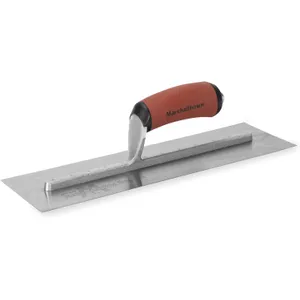
MARSHALLTOWN Finishing Trowel 4.75x14 Steel

MARSHALLTOWN Finishing Trowel 4.75x14 Steel

$40-$454.7
View on Amazon
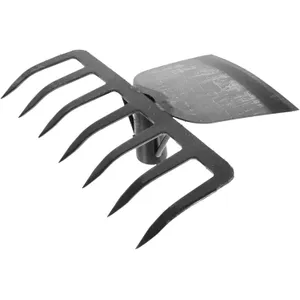
Stainless Steel Garden Hoe Rake Weeding Tool

Stainless Steel Garden Hoe Rake Weeding Tool

$30-$354.5
View on Amazon
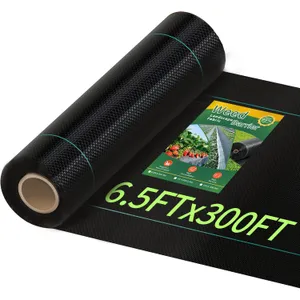
Weed Barrier Landscape Fabric Heavy Duty 6.5ftx300ft

Weed Barrier Landscape Fabric Heavy Duty 6.5ftx300ft

$65-$754.5
View on Amazon
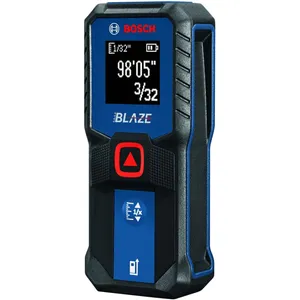
BOSCH GLM20 Blaze 65ft Laser Distance Measure

BOSCH GLM20 Blaze 65ft Laser Distance Measure

$30-$504.6
View on Amazon
Quick Setting Cement 10lb Bag

Quick Setting Cement 10lb Bag

$10-$124.6
View on Amazon
True Temper 6 Cu Ft Steel Tray Wheelbarrow

True Temper 6 Cu Ft Steel Tray Wheelbarrow

$89-$1204.5
View on Amazon
MARSHALLTOWN Finishing Trowel 4.75x14 Steel

MARSHALLTOWN Finishing Trowel 4.75x14 Steel

$40-$454.7
View on Amazon
Stainless Steel Garden Hoe Rake Weeding Tool

Stainless Steel Garden Hoe Rake Weeding Tool

$30-$354.5
View on Amazon
Weed Barrier Landscape Fabric Heavy Duty 6.5ftx300ft

Weed Barrier Landscape Fabric Heavy Duty 6.5ftx300ft

$65-$754.5
View on Amazon
BOSCH GLM20 Blaze 65ft Laser Distance Measure

BOSCH GLM20 Blaze 65ft Laser Distance Measure

$30-$504.6
View on Amazon

As an Amazon Associate, we earn from qualifying purchases.

How This Calculator Works

Volume calculations follow Portland Cement Association standards. Includes 10% waste factor recommendation per industry best practice.

Sources: Portland Cement Association, International Building Code (IBC)

Frequently Asked Questions

Q

How do I calculate how much concrete I need?

Volume = Length × Width × Thickness. Convert to cubic yards: Volume (cu ft) ÷ 27 = cubic yards. Example: 10ft × 10ft × 4in slab = 100 sq ft × 0.33 ft = 33 cu ft ÷ 27 = 1.22 cubic yards.

  • Formula: L × W × Thickness (in feet) = cubic feet
  • Convert to yards: Cubic feet ÷ 27 = cubic yards
  • 4 inch slab: Multiply sq ft × 0.33 ft ÷ 27
  • 6 inch slab: Multiply sq ft × 0.50 ft ÷ 27
  • Always round UP and add 5-10% waste
Slab ThicknessSq Ft per Cubic YardExample: 100 sq ft
4 inches81 sq ft1.23 cubic yards
5 inches65 sq ft1.54 cubic yards
6 inches54 sq ft1.85 cubic yards
8 inches40 sq ft2.47 cubic yards
Q

How many bags of concrete do I need?

One cubic yard = 45 bags (80 lb) or 60 bags (60 lb) or 90 bags (40 lb). For small projects: 80 lb bag covers 0.6 cu ft, 60 lb bag covers 0.45 cu ft. Bagged concrete is cost-effective under 1 cubic yard.

  • < 1 cubic yard: Bags are usually more practical
  • > 1 cubic yard: Ready-mix truck is more economical
  • 80 lb bags: Best value per cubic foot
  • Quikrete vs Sakrete: Similar performance, compare prices
Bag SizeYield (cu ft)Bags per Cu YardBest For
40 lb0.30 cu ft90 bagsSmall repairs
60 lb0.45 cu ft60 bagsPosts, small projects
80 lb0.60 cu ft45 bagsMost DIY projects
Q

How thick should my concrete slab be?

Driveway: 4-6 inches. Patio/sidewalk: 4 inches. Garage floor: 4-6 inches. Heavy equipment: 6-8 inches. Footings: Local code (often 8-12 inches). Thicker = stronger but more expensive. Rebar adds strength without extra thickness.

  • Add wire mesh or rebar for crack prevention
  • Thicker edges for driveways (6" apron)
  • Check local building codes for requirements
  • Proper base preparation is as important as thickness
ApplicationMinimum ThicknessRecommendedNotes
Sidewalk3.5"4"Light foot traffic
Patio4"4"Furniture, foot traffic
Driveway (cars)4"4-5"Regular vehicles
Driveway (trucks/RV)5"6"Heavy vehicles
Garage floor4"4-6"Depends on vehicles
Shed foundation4"4"Light structures
Q

Should I order extra concrete?

Yes! Order 5-10% extra for waste, spillage, and uneven subgrade. Better to have a little extra than to run short mid-pour. Ready-mix has minimums (often 1 yard). Leftover can be used for stepping stones or small projects.

  • 5% extra: Simple flat slabs with good forms
  • 10% extra: Uneven ground, complex shapes
  • 15% extra: Slopes, irregular edges
  • Running short mid-pour = disaster (cold joints)
  • Leftover concrete: Stepping stones, small repairs
Q

Ready-mix vs bagged concrete: Which is better?

Bagged: Best for < 1 cubic yard (< 45 bags). Ready-mix: More economical for 1+ cubic yards, faster, more consistent. Break-even is typically around 1 cubic yard. Factor in your time mixing bags.

  • Ready-mix minimum: Usually 1 yard (some do 0.5 yard)
  • Ready-mix: Order exact PSI strength you need
  • Saturday delivery: Often extra charge
  • Have helpers ready - concrete waits for no one!
FactorBagged ConcreteReady-Mix Truck
Best for< 1 cubic yard1+ cubic yards
Cost per yard$100-150$150-200 + delivery
LaborYou mix each bagTruck pours
QualityVariableConsistent
TimeHours of mixingPoured in minutes
Q

What PSI concrete do I need?

2500 PSI: Residential footings. 3000 PSI: Driveways, patios (most common). 4000 PSI: Commercial, heavy traffic. 5000+ PSI: Industrial. Standard bagged concrete is 3000-4000 PSI. Higher PSI = stronger but more expensive.

  • 3000 PSI is standard for most residential
  • Freeze-thaw areas: Consider 4000 PSI + air entrainment
  • Bagged concrete: Usually 3000-4000 PSI
  • PSI develops over 28 days (reaches 70% in 7 days)
PSI RatingUse CasesCost
2500 PSIFootings, foundationsLowest
3000 PSIDriveways, sidewalks, patiosStandard
3500 PSIDriveways with heavy vehiclesModerate
4000 PSICommercial, garage floorsHigher
5000+ PSIIndustrial, freeze-thaw areasHighest

Find a Contractor Near You

Get free quotes from licensed contractors in your area

Angi
Angi4.7/5

Verified reviews & background checks

Get Free Quotes

Showing results for your area

Example Calculations

1Standard Patio Slab (10×10 ft)

Inputs

Length10 ft
Width10 ft
Thickness4 inches

Result

Concrete Needed1.23 cubic yards
80 lb Bags56 bags
With 10% Waste1.35 cubic yards

A 100 sq ft patio at 4" thick requires about 1.23 yards. Order 1.5 yards from ready-mix or 56 bags.

2Two-Car Driveway

Inputs

Length20 ft
Width18 ft
Thickness5 inches

Result

Concrete Needed5.56 cubic yards
With 10% Waste6.1 cubic yards
RecommendationOrder ready-mix

At 5" thick for vehicles, a 360 sq ft driveway needs ~6 yards. Ready-mix is the only practical option.

3Fence Post Holes (10 posts)

Inputs

Posts10
Hole Diameter10 inches
Hole Depth24 inches

Result

Concrete per Post0.58 cu ft
Total for 10 Posts5.8 cu ft
80 lb Bags Needed10 bags

For fence posts, use 1 bag (80 lb) per post hole. Bagged concrete is perfect for this application.

Formulas Used

Concrete Volume (Rectangular)

Volume = Length × Width × Thickness

Basic formula for slabs, patios, and driveways.

Where:

Length= Length in feet
Width= Width in feet
Thickness= Thickness in feet (divide inches by 12)

Source: Portland Cement Association

Cubic Feet to Cubic Yards

Cubic Yards = Cubic Feet ÷ 27

Convert volume to ordering units (1 cubic yard = 27 cubic feet).

Cylinder Volume (Posts/Footings)

Volume = π × radius² × depth

For round holes like fence posts and tube footings.

Complete Guide to Concrete Estimation and Ordering

1

Square Feet per Cubic Yard by Slab Thickness

One cubic yard of concrete covers 81 square feet at 4 inches thick — this single number is the most useful shortcut for quick estimation. For a 5-inch driveway slab, coverage drops to 65 sq ft/yd; at 6 inches, just 54 sq ft/yd. Memorizing these figures lets you sanity-check any estimate in seconds.

The math is straightforward: 1 cubic yard = 27 cubic feet, so coverage = 27 ÷ (thickness in feet). At 4 inches (0.333 ft), that is 27 ÷ 0.333 = 81 sq ft. Always add 5–10% for waste from spillage, uneven subgrade, and forms that bow under pressure during the pour.

For irregular shapes like curved patios or L-shaped driveways, break the area into rectangles, calculate each separately, and sum the totals. Use the concrete footing calculator for cylindrical post holes, which require the cylinder volume formula instead.

Slab ThicknessSq Ft per Cubic YardCommon Application
4 inches81 sq ftPatios, sidewalks, shed pads
5 inches65 sq ftResidential driveways
6 inches54 sq ftHeavy-vehicle driveways, garage floors
8 inches40 sq ftCommercial slabs, equipment pads

Quick check: Divide your total square footage by the coverage number above. A 400 sq ft driveway at 5 inches = 400 ÷ 65 = 6.15 cubic yards before waste.

2

Bagged Concrete vs. Ready-Mix Truck Delivery

For projects under 1 cubic yard (roughly 45 bags of 80-lb mix), bagged concrete from a home center is the most practical option at $5–$6 per bag, totaling $225–$270 per cubic yard of material. Above 1 cubic yard, a ready-mix truck delivery at $150–$200 per yard plus a $50–$100 delivery fee becomes far more economical and saves hours of hand-mixing labor.

An 80-lb bag yields 0.60 cubic feet of mixed concrete; a 60-lb bag yields 0.45 cu ft. You need 45 bags (80 lb) or 60 bags (60 lb) to make one full cubic yard. At 80 lbs per bag, mixing just one cubic yard means lifting and mixing 3,600 lbs of dry material — a full day of backbreaking work versus a 10-minute truck pour.

Ready-mix trucks typically have a 1-yard minimum order, with some suppliers offering half-yard minimums at a premium. Order 5–10% more than your calculated volume — running short mid-pour creates cold joints (weak seams) that compromise the slab’s structural integrity and cannot be repaired after the fact.

FactorBagged (80 lb)Ready-Mix Truck
Best forUnder 1 cu yd1+ cu yd
Cost per cu yd$225–$270$150–$200 + delivery
Bags per cu yd45 bagsN/A
Mix time per yd4–6 hours hand-mix10 minutes
ConsistencyVariablePlant-batched, uniform

Tip: Most ready-mix plants charge $1–$2 per minute for wait time beyond 5–7 minutes per yard. Have your forms, rebar, and helpers ready before the truck arrives.

3

Slab Thickness Guide by Application

A standard 4-inch patio slab handles foot traffic, patio furniture, and grills with a 3,000 PSI mix — the most common residential pour. Driveways should be 4–6 inches depending on vehicle weight: 4 inches suffices for passenger cars, but 5–6 inches is necessary for trucks, SUVs, or RVs that impose 2–3× the point load.

Garage floors follow the same 4–6-inch range, with 6 inches recommended if you plan to park heavy vehicles or install a car lift. Thickened edges (6–8 inches) at the driveway apron where it meets the street prevent cracking from the repeated stress of vehicles driving on and off.

Footings and foundations have their own thickness requirements set by local building codes, typically 8–12 inches for residential strip footings. The concrete expansion joint calculator helps plan joint spacing for any slab thickness to control cracking, while the concrete countertop calculator covers the specialty 1.5–3-inch pours used for indoor countertops.

PSI ratings assume standard residential loads; verify with local building codes
ApplicationThicknessPSI RatingReinforcement
Patio/sidewalk4 in.3,000Wire mesh or fiber
Driveway (cars)4–5 in.3,000–3,500Wire mesh
Driveway (trucks/RV)5–6 in.3,500–4,000Rebar #3 @ 18 in.
Garage floor4–6 in.3,000–4,000Wire mesh or rebar
Footings (residential)8–12 in.2,500–3,000Rebar per code
4

Reinforcement, Subgrade Prep, and Pouring Tips

Welded wire mesh (6×6 W1.4/W1.4) costs $3–$5 per 5×10-foot sheet and is the most common reinforcement for residential slabs 4–6 inches thick. For driveways expecting heavy loads, #3 rebar on 18-inch centers provides significantly more tensile strength and is required by many building codes for slabs over 5 inches.

Subgrade preparation accounts for 90% of long-term slab performance. Compact the soil to 95% density (rent a plate compactor for $50–$75/day), add a 4-inch layer of compacted gravel base, and lay 6-mil polyethylene vapor barrier to block ground moisture. Skipping the gravel base is the most common DIY mistake and leads to settling cracks within 1–2 years.

Pour concrete starting at the far corner and work toward the exit point. Strike off with a screed board, then bull-float the surface within 10 minutes to push aggregate down and bring cream to the top. Wait until bleed water disappears (30–60 minutes in warm weather) before finishing with a steel trowel or broom texture.

Never pour on frozen ground or into standing water. Concrete placed below 50°F requires insulated blankets for 48+ hours; above 90°F, mist-cure and shade to prevent rapid drying and surface cracking.

  • Wire mesh: $3–$5 per sheet, adequate for patios and light-duty slabs
  • Rebar #3 @ 18 in.: $0.50–$0.75 per linear foot, required for driveways over 5 in.
  • Fiber reinforcement: $8–$12 per bag additive, reduces surface cracking but not structural
  • Gravel base: 4 in. compacted, $25–$40 per cubic yard delivered
  • Vapor barrier: 6-mil poly, $0.10–$0.15 per sq ft, prevents moisture migration

Related Calculators

Area Calculator

Calculate area

Tile Calculator

Calculate tiles needed

Flooring Calculator

Calculate flooring

Soil Calculator

Calculate how much soil you need for raised beds, gardens, and landscaping. Get cubic yards, bags needed, and cost estimates for your project. Compare options.

Post Hole Concrete Calculator

Calculate how many bags of concrete you need for fence and deck post holes. Enter post size, hole dimensions, and number of posts for accurate estimates.

Concrete Countertop Calculator

Calculate concrete mix, reinforcement, and finishing materials for DIY countertops. Compare total project costs vs granite, quartz, and professional install.

Related Resources

How Much Concrete Do I Need? Concrete Calculator for Slabs & Footings

Read our guide

How Much Does Concrete Work Cost in 2026? (Driveways, Patios & Slabs)

Read our guide

Average Concrete Cost by State in 2026 (All 50 States Compared)

Read our guide

Flooring Calculator Guide

Plan flooring materials for your project

Paint Calculator Guide

Calculate paint coverage for any room

Construction Tools

Plan your project

View All

Last Updated: Mar 26, 2026

This calculator is provided for informational and educational purposes only. Results are estimates and should not be considered professional financial, medical, legal, or other advice. Always consult a qualified professional before making important decisions. UseCalcPro is not responsible for any actions taken based on calculator results.

UseCalcPro
FinanceHealthMath

© 2026 UseCalcPro