UseCalcPro
Home
MathFinanceHealthConstructionAutoPetsGardenCraftsFood & BrewingToolsSportsMarineEducationTravel
Blog
  1. Home
  2. Construction

Post Hole Concrete Calculator

Calculate exact bags of concrete for your post holes

Bags of Concrete Needed

24 bags

Per Hole

1.396 ft³

Total Vol

13.96 ft³

Cost

$156.00

in
in
in
$
Per Hole

1.396 ft³

Total Volume

13.96 ft³

Bags Needed

24

Total Weight

1,920 lbs

Water Needed

12.0 gal

Total Cost

$156.00

Cost Summary

24 × 80 lb bags$156
Cost per post$15.60
Bags per post2.4

What You'll Need

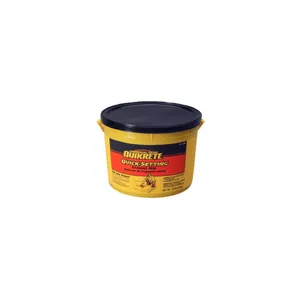
Quick Setting Cement 10lb Bag

Quick Setting Cement 10lb Bag

$10-$124.6
View on Amazon
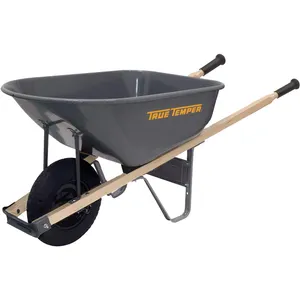
True Temper 6 Cu Ft Steel Tray Wheelbarrow

True Temper 6 Cu Ft Steel Tray Wheelbarrow

$89-$1204.5
View on Amazon
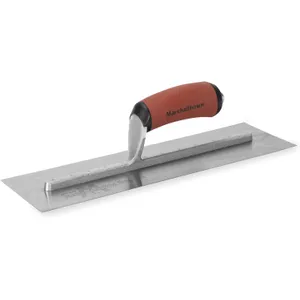
MARSHALLTOWN Finishing Trowel 4.75x14 Steel

MARSHALLTOWN Finishing Trowel 4.75x14 Steel

$40-$454.7
View on Amazon
Post Hole Digger 48" Fiberglass Handle

Post Hole Digger 48" Fiberglass Handle

$28-$384.5
View on Amazon
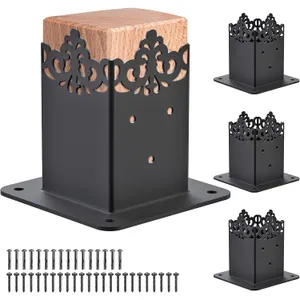
4x4 Post Base Bracket Heavy Duty Steel 4-Pack

4x4 Post Base Bracket Heavy Duty Steel 4-Pack

$55-$654.8
View on Amazon
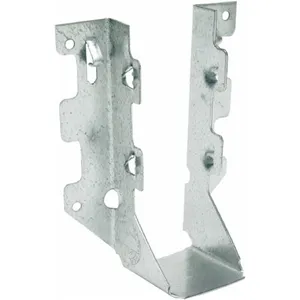
Simpson Strong-Tie Joist Hanger 2x6 20pk

Simpson Strong-Tie Joist Hanger 2x6 20pk

$30-$454.8
View on Amazon
Quick Setting Cement 10lb Bag

Quick Setting Cement 10lb Bag

$10-$124.6
View on Amazon
True Temper 6 Cu Ft Steel Tray Wheelbarrow

True Temper 6 Cu Ft Steel Tray Wheelbarrow

$89-$1204.5
View on Amazon
MARSHALLTOWN Finishing Trowel 4.75x14 Steel

MARSHALLTOWN Finishing Trowel 4.75x14 Steel

$40-$454.7
View on Amazon
Post Hole Digger 48" Fiberglass Handle

Post Hole Digger 48" Fiberglass Handle

$28-$384.5
View on Amazon
4x4 Post Base Bracket Heavy Duty Steel 4-Pack

4x4 Post Base Bracket Heavy Duty Steel 4-Pack

$55-$654.8
View on Amazon
Simpson Strong-Tie Joist Hanger 2x6 20pk

Simpson Strong-Tie Joist Hanger 2x6 20pk

$30-$454.8
View on Amazon

As an Amazon Associate, we earn from qualifying purchases.

Frequently Asked Questions

Q

How deep should a fence post hole be?

A fence post hole should be 1/3 the total post length plus 6 inches for a gravel base. For a standard 8-foot fence post, dig 32 inches deep (2 feet 8 inches). In cold climates, the hole must extend below the frost line, which ranges from 12 to 72 inches depending on location.

  • 6-ft fence post: dig 24 inches deep (1/3 of 72 in) + 6 in gravel = 30 inches total
  • 8-ft fence post: dig 32 inches deep (1/3 of 96 in) + 6 in gravel = 38 inches total
  • Frost line depth: 12 in (southern US) to 72 in (northern Minnesota/Montana)
  • Add 4–6 inches of gravel at the bottom for drainage to prevent frost heave
  • Check local code — many municipalities require post holes below frost line regardless of fence height
Q

How many bags of concrete do I need per fence post?

Most standard fence posts (4x4 post, 12-inch hole, 24-inch depth) require 2 to 3 bags of 80 lb concrete mix. Larger posts or deeper holes need more. Use this calculator to get an exact count based on your dimensions.

  • 4×4 post in 10-inch hole, 24 in deep: ~1.5 bags of 80-lb concrete per post
  • 4×4 post in 12-inch hole, 24 in deep: ~2.3 bags of 80-lb concrete per post
  • 6×6 post in 18-inch hole, 36 in deep: ~7.9 bags of 80-lb concrete per post
  • Always round up and buy 10% extra to account for uneven holes and spillage
  • A 50-post fence with 4×4 posts needs roughly 100–120 bags of 80-lb concrete
Bag SizeWeightYield (ft³)Avg Price
40 lb40 lbs0.30 ft³$3.50–$4.50
50 lb50 lbs0.375 ft³$4.50–$5.50
60 lb60 lbs0.45 ft³$5.00–$6.00
80 lb80 lbs0.60 ft³$6.00–$7.50
Q

How long does post hole concrete take to cure?

Fast-setting concrete sets in 20 to 40 minutes and reaches full strength in 24 hours. Standard concrete mix takes 24 to 48 hours to set and reaches full strength (around 3,000 PSI) in 28 days. Avoid putting heavy load on posts for at least 24 hours.

  • Fast-setting (Quikrete Fast-Setting): 20–40 min initial set, full strength in 4 hours
  • Standard concrete: 24–48 hours to set, reaches 3,000 PSI at 28 days
  • Keep concrete moist for 48 hours after pouring for optimal curing in hot weather
  • Temperature below 40°F slows curing significantly — use cold-weather formula if needed
  • Do not hang gates or attach heavy panels until at least 24 hours after pouring
Concrete TypeInitial SetFull StrengthBest For
Fast-Setting20–40 min4 hoursSame-day fence builds
Standard Mix24–48 hours28 daysBudget projects, heavy loads
High-Strength10–12 hours28 daysDeck posts, structural loads
Q

What size hole should I dig for a 4x4 post?

For a 4x4 post (3.5 inches actual width), dig a hole 10 to 12 inches in diameter. The general rule is the hole diameter should be 3 times the post width. This provides enough room for concrete to surround the post and anchor it securely.

  • 4×4 post (3.5 in actual): dig a 10–12 inch diameter hole
  • 6×6 post (5.5 in actual): dig a 16–18 inch diameter hole
  • Use a post hole digger for holes up to 12 in; rent a power auger for larger/deeper holes
  • Power auger rental: $50–$80/day, digs a 12-inch hole in under a minute
  • Keep sides vertical — a flared or bell-shaped hole wastes concrete
Q

Should I use fast-setting or regular concrete for post holes?

Fast-setting concrete is ideal for post holes because you can pour it dry and add water on top. It sets in 20-40 minutes so you can attach fence panels the same day. Regular concrete is cheaper and works fine if you can wait 24-48 hours before loading the post.

  • Fast-setting: $7–$8 per 50-lb bag; pour dry into hole, add water — no mixing needed
  • Regular mix: $5–$6.50 per 80-lb bag; requires mixing in a wheelbarrow or bucket
  • Fast-setting saves 2+ hours per project since you can brace and hang panels immediately
  • For 50+ post projects, regular mix saves $100–$200 in material costs
  • Both types reach the same final strength (~3,000–4,000 PSI) when fully cured

Find a Contractor Near You

Get free quotes from licensed contractors in your area

Angi
Angi4.7/5

Verified reviews & background checks

Get Free Quotes

Showing results for your area

Example Calculations

110 Fence Posts (4" post, 12" hole, 24" deep)

Inputs

Post Diameter4 in
Hole Diameter12 in
Hole Depth24 in
Number of Posts10
Bag Size80 lb
Price per Bag$6.50

Result

Bags Needed24 bags
Volume per Hole1.396 ft³
Total Volume13.96 ft³
Total Weight1,920 lbs
Water Needed12.0 gal
Total Cost$156.00

R = 6/12 = 0.5 ft, r = 2/12 = 0.167 ft, D = 24/12 = 2 ft. V per hole = π × (0.25 - 0.028) × 2 = 1.396 ft³. Total = 1.396 × 10 = 13.96 ft³. Bags = ceil(13.96 / 0.60) = 24.

220 Deck Posts (6" post, 18" hole, 36" deep)

Inputs

Post Diameter6 in
Hole Diameter18 in
Hole Depth36 in
Number of Posts20
Bag Size80 lb
Price per Bag$6.50

Result

Bags Needed158 bags
Volume per Hole4.712 ft³
Total Volume94.25 ft³
Total Weight12,640 lbs
Water Needed79.0 gal
Total Cost$1,027.00

R = 9/12 = 0.75 ft, r = 3/12 = 0.25 ft, D = 36/12 = 3 ft. V per hole = π × (0.5625 - 0.0625) × 3 = 4.712 ft³. Total = 4.712 × 20 = 94.25 ft³. Bags = ceil(94.25 / 0.60) = 158.

Formulas Used

Volume Per Hole

V = π × (R² - r²) × D

Calculates the concrete volume for one post hole by subtracting the post cylinder from the hole cylinder.

Where:

R= Radius of the hole (hole diameter / 2), converted to feet
r= Radius of the post (post diameter / 2), converted to feet
D= Depth of the hole in feet

Total Bags Needed

Bags = ceil(V × N / coverage)

Total bags rounded up. An 80 lb bag yields 0.60 cubic feet of mixed concrete.

Where:

V= Volume per hole in cubic feet
N= Number of post holes
coverage= Cubic feet per bag (40 lb = 0.30, 50 lb = 0.375, 60 lb = 0.45, 80 lb = 0.60)

Water Needed

Water (gal) = bags × 0.5 × (bag weight / 80)

Approximate water needed for mixing. Based on 0.5 gallons per 80 lb bag, scaled proportionally for other bag sizes.

Where:

bags= Total number of bags
bag weight= Weight of each bag in pounds

Calculating Concrete for Fence and Deck Post Holes

1

Concrete Volume Per Post Hole

Each post hole is a cylinder with a smaller cylinder (the post) removed from the center. The concrete volume formula is V = π × (R² – r²) × D, where R is the hole radius, r is the post radius, and D is the depth. A 4×4 post (3.5-inch actual) in a 12-inch hole dug 24 inches deep requires 1.40 cubic feet of concrete — roughly 2.3 bags of 80-lb mix.

Scaling to a 6×6 post (5.5-inch actual) in an 18-inch hole at 36 inches deep jumps to 4.71 cubic feet per hole — nearly 8 bags of 80-lb concrete. That single hole weighs over 600 lbs when cured. A 20-post deck project at this size needs 158 bags totaling 12,640 lbs, which means planning delivery rather than trunk loads.

The volume calculation assumes perfectly cylindrical holes, but hand-dug post holes flare at the top and taper at the bottom. Budget 10–15% extra concrete to fill the irregularities. The concrete calculator handles larger pours like continuous footings and slab foundations if your project extends beyond individual post holes.

*80-lb bag yields 0.60 ft³ of mixed concrete
Post SizeHole DiameterDepthVolume/Hole80-lb Bags/Hole
4×4 (3.5")10"24"0.91 ft³1.5
4×4 (3.5")12"24"1.40 ft³2.3
6×6 (5.5")18"36"4.71 ft³7.9
6×6 (5.5")18"42"5.50 ft³9.2
2

Hole Depth Rules: Frost Line and the 1/3 Rule

The general rule is to dig post holes 1/3 the total post length plus 6 inches for a gravel drainage base. An 8-foot fence post needs a 32-inch hole (1/3 of 96 inches) plus 6 inches of gravel, totaling 38 inches of excavation. For a 6-foot post, the minimum is 24 inches of concrete depth plus 6 inches of gravel.

In cold climates, the frost line overrides the 1/3 rule. Frost depth ranges from 12 inches in the southern US to 72 inches in northern Minnesota and Montana. If your frost line exceeds the 1/3 calculation, dig to the frost line. Posts set above the frost line are susceptible to frost heave, which pushes the post upward and loosens the concrete bond.

Always add 4–6 inches of gravel at the bottom of the hole before pouring concrete. Gravel provides drainage that prevents water from pooling under the post and freezing. Without drainage, the freeze-thaw cycle can crack the concrete collar within 2–3 winters. The fence post depth calculator provides frost-line-specific recommendations by region.

Tip: Dig holes 3× the post width in diameter. A 4×4 post (3.5" actual) needs a 10–12" hole; a 6×6 post (5.5" actual) needs a 16–18" hole for adequate concrete encasement.

3

Fast-Setting vs. Standard Concrete for Post Holes

Fast-setting concrete (e.g., Quikrete Fast-Setting Mix) sets in 20–40 minutes and reaches working strength in 4 hours. You can pour it dry directly into the hole around the post and add water on top — no mixing required. This saves 1–2 hours per project and lets you hang fence panels or attach rails the same day.

Standard concrete mix costs $5–$6.50 per 80-lb bag versus $7–$8 for fast-setting. On a 50-post fence project, the savings add up: $250–$325 in standard mix versus $350–$400 in fast-setting. Both reach the same final compressive strength of 3,000–4,000 PSI when fully cured at 28 days.

High-strength concrete (4,000–5,000 PSI) is worth the premium ($7–$9 per bag) for deck posts and any structural application where the post supports a roof or elevated platform. Standard mix at 3,000 PSI is adequate for most fence posts. The foundation calculator covers continuous footer pours for deck and porch substructures.

Concrete TypeCost (80 lb)Set TimeFinal StrengthBest For
Fast-Setting$7–$820–40 min4,000 PSISame-day fence builds
Standard Mix$5–$6.5024–48 hrs3,000 PSIBudget projects
High-Strength$7–$910–12 hrs5,000 PSIDeck/structural posts
4

Step-by-Step Post Setting Process

Setting 10 fence posts with concrete takes 3–4 hours with fast-setting mix or requires two separate days with standard mix (one for pouring, one for panel installation after 24-hour cure). Renting a two-person power auger at $50–$80 per day reduces the digging phase from 2–3 hours to 30–45 minutes for 10 holes.

Total material cost for a 10-post fence section using 4×4 posts in 12-inch holes at 24 inches deep is approximately $156 for 24 bags of 80-lb concrete at $6.50 each, plus $40–$80 for the gravel base. The fence calculator estimates complete material lists including posts, panels, rails, and hardware.

  1. 1

    Mark and dig post holes

    Use string lines for alignment. Dig holes 3× post width in diameter and to the required depth (1/3 post length or frost line, whichever is deeper). Keep sides vertical.

  2. 2

    Add gravel drainage base

    Pour 4–6 inches of crushed gravel into each hole and tamp firmly. This prevents water from pooling under the post and causing frost heave.

  3. 3

    Set and plumb the post

    Place the post in the center of the hole. Check plumb on two adjacent sides with a level. Brace with 2×4 stakes screwed to the post to hold it perfectly vertical.

  4. 4

    Pour concrete and hydrate

    For fast-setting: pour dry mix around the post to within 3–4 inches of grade, then add water (0.5 gal per 50-lb bag). For standard: pre-mix in a wheelbarrow and pour. Crown the top to shed water away from the post.

Related Calculators

Concrete Calculator

Calculate concrete for any project

Fence Calculator

Estimate fence materials and cost

Foundation Calculator

Calculate foundation concrete

Deck Calculator

Calculate deck materials

Fence Post Depth Calculator

Calculate fence post depth, hole diameter, post count, and concrete bags needed from fence height, frost line depth, soil type, wind exposure, and spacing.

Concrete Footing Calculator

Calculate concrete needed for deck post footings. Get cubic yards, 60lb and 80lb bag counts, and cost estimates for cylindrical sonotubes and pier footings.

Related Resources

How Much Concrete Do I Need? Concrete Calculator for Slabs & Footings

Read our guide

How Much Paint Do I Need for a Room? Complete Calculator Guide

Read our guide

Fence Cost Calculator: Posts, Panels & Materials for Any Yard

Read our guide

Concrete Calculator

Calculate concrete for slabs, footings, and walls

Fence Calculator

Estimate fence posts, panels, and total cost

Deck Calculator

Calculate deck materials and costs

Foundation Calculator

Estimate foundation concrete needs

More Construction Calculators

Explore calculators for concrete, lumber, roofing, and more

View All Construction Calculators

Last Updated: Mar 26, 2026

This calculator is provided for informational and educational purposes only. Results are estimates and should not be considered professional financial, medical, legal, or other advice. Always consult a qualified professional before making important decisions. UseCalcPro is not responsible for any actions taken based on calculator results.

UseCalcPro
FinanceHealthMath

© 2026 UseCalcPro