UseCalcPro
Home
MathFinanceHealthConstructionAutoPetsGardenCraftsFood & BrewingToolsSportsMarineEducationTravel
Blog
  1. Home
  2. Construction

Shelf Sag Calculator

Predict how much your shelf will sag and find the maximum safe span for any material and load

Deflection

0.095"

Rating

Good

L/360 Limit

0.133"

Max Span

4' 9"

in
in
in
lbs

Good

Passes L/360 rule — deflection within acceptable limits

Deflection Analysis

Predicted Sag

0.095"

L/360 Limit

0.133"

Span Ratio

L/506

Max Safe Span

4.7 ft

Visual Sag Preview

0.095"

Engineering Details

MaterialOak
Young's Modulus (E)1.80M psi
Moment of Inertia (I)0.4219 in⁴

What You'll Need

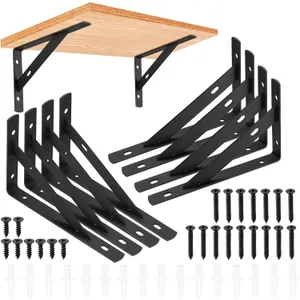
Heavy Duty L-Shaped Shelf Brackets 8-Pack Metal

Heavy Duty L-Shaped Shelf Brackets 8-Pack Metal

$12-$184.4
View on Amazon
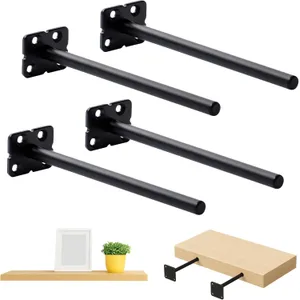
SOMADA 8" Floating Shelf Brackets 4-Pack Concealed

SOMADA 8" Floating Shelf Brackets 4-Pack Concealed

$12-$184.5
View on Amazon
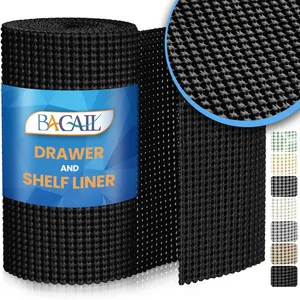
BAGAIL Shelf Liner 12" x 10ft Non-Adhesive Non-Slip

BAGAIL Shelf Liner 12" x 10ft Non-Adhesive Non-Slip

$8-$124.5
View on Amazon
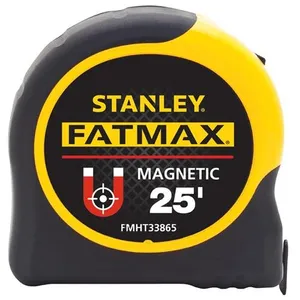
Stanley FatMax 25ft Magnetic Tape Measure

Stanley FatMax 25ft Magnetic Tape Measure

$18-$254.8
View on Amazon
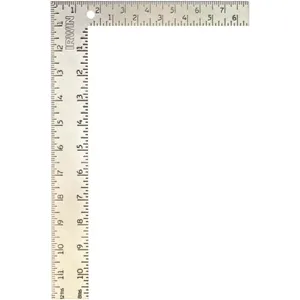
IRWIN Carpenter Square 8x12"

IRWIN Carpenter Square 8x12"

$10-$154.7
View on Amazon
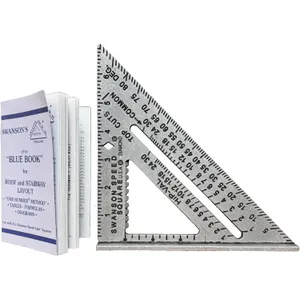
SWANSON Tool 7 Inch Speed Square Blue

SWANSON Tool 7 Inch Speed Square Blue

$8-$124.8
View on Amazon
Heavy Duty L-Shaped Shelf Brackets 8-Pack Metal

Heavy Duty L-Shaped Shelf Brackets 8-Pack Metal

$12-$184.4
View on Amazon
SOMADA 8" Floating Shelf Brackets 4-Pack Concealed

SOMADA 8" Floating Shelf Brackets 4-Pack Concealed

$12-$184.5
View on Amazon
BAGAIL Shelf Liner 12" x 10ft Non-Adhesive Non-Slip

BAGAIL Shelf Liner 12" x 10ft Non-Adhesive Non-Slip

$8-$124.5
View on Amazon
Stanley FatMax 25ft Magnetic Tape Measure

Stanley FatMax 25ft Magnetic Tape Measure

$18-$254.8
View on Amazon
IRWIN Carpenter Square 8x12"

IRWIN Carpenter Square 8x12"

$10-$154.7
View on Amazon
SWANSON Tool 7 Inch Speed Square Blue

SWANSON Tool 7 Inch Speed Square Blue

$8-$124.8
View on Amazon

As an Amazon Associate, we earn from qualifying purchases.

Frequently Asked Questions

Q

What is the L/360 rule for shelves?

The L/360 rule states that a shelf's maximum acceptable deflection equals its span divided by 360. For a 36-inch shelf, the limit is 0.1 inches. This standard comes from structural engineering and ensures sag is virtually invisible to the eye.

  • 24" shelf: max deflection = 0.067" (L/360)
  • 36" shelf: max deflection = 0.100" (L/360)
  • 48" shelf: max deflection = 0.133" (L/360)
  • L/600 or better is considered excellent (sag completely invisible)
  • L/180 or worse means visible sagging — add support or upgrade material
Q

What is the best material to prevent shelf sagging?

Maple and oak are the best common shelf materials for resisting sag, with Young's modulus values of 1.83M and 1.8M psi respectively. Plywood (1.5M psi) is a strong budget option. Avoid particle board (0.4M psi) and melamine (0.43M psi) for long unsupported spans.

  • Maple: E = 1.83M psi — strongest common hardwood for shelving
  • Oak: E = 1.80M psi — nearly as stiff as maple, widely available
  • Plywood (Baltic birch): E = 1.5M psi — best value per dollar
  • Pine: E = 1.2M psi — soft but adequate for shorter spans (≤36")
  • Particle board: E = 0.4M psi — 4.5× weaker than maple, sags easily
MaterialYoung’s Modulus (psi)Max Span at 3/4" & 50 lbsCost/BF
Maple1,830,000≈52"$6–$10
Oak1,800,000≈50"$5–$9
Plywood (birch)1,500,000≈46"$3–$5/sq ft
Pine1,200,000≈40"$3–$6
MDF580,000≈30"$1–$2/sq ft
Particle board400,000≈24"$0.75–$1.50/sq ft
Q

How thick should a shelf be to avoid sagging?

For most bookshelf applications with spans under 36 inches, 3/4-inch (19mm) solid wood or plywood works well. For spans over 36 inches, use 1-inch or thicker boards. Doubling thickness reduces deflection by 8 times because stiffness scales with the cube of thickness.

  • 3/4" (19mm): standard for bookshelves up to 36" span
  • 1" (25mm): recommended for spans of 36–48" with moderate loads
  • 1-1/2" (38mm): handles spans up to 60" with heavy loads
  • Doubling thickness: 8× stiffer (0.75" → 1.5" = 8× less deflection)
  • Edge banding plywood adds appearance but no structural benefit
ThicknessMoment of Inertia (12" wide)Relative Stiffness
1/2" (13mm)0.0104 in⁴0.30×
3/4" (19mm)0.0352 in⁴1.0× (baseline)
1" (25mm)0.0833 in⁴2.4×
1-1/2" (38mm)0.2813 in⁴8.0×
Q

How does shelf thickness affect sag?

Shelf thickness has a cubic relationship to stiffness. Doubling the thickness makes the shelf 8 times stiffer (2³ = 8). A 1.5-inch shelf sags 8 times less than a 0.75-inch shelf of the same material and span. Thickness is the most effective way to reduce sag.

  • Stiffness formula: I = w × t³ / 12 (moment of inertia)
  • 1.5× thickness = 3.4× stiffer (1.5³ = 3.375)
  • 2× thickness = 8× stiffer (2³ = 8)
  • 3× thickness = 27× stiffer (3³ = 27)
  • Thickness is more effective than width: doubling width only doubles stiffness (linear)
Q

How far can a shelf span without sagging?

Maximum span depends on material, thickness, and load. A 3/4-inch oak shelf loaded with 50 lbs can safely span about 48 inches. Particle board or melamine of the same thickness should not exceed 24–30 inches. Adding a center support effectively halves the span.

  • Oak 3/4": safe to ≈48" with 50 lbs (L/506 rating)
  • Pine 3/4": safe to ≈40" with 50 lbs
  • Plywood 3/4": safe to ≈46" with 50 lbs
  • Particle board 3/4": limit to 24–28" with 50 lbs
  • Center bracket cuts effective span in half, reducing deflection 16×
Q

Does a floating shelf sag more than a bracket shelf?

Yes, floating (cantilever) shelves deflect significantly more than bracket-supported shelves of the same length. A floating shelf with uniform load sags roughly 9.6 times more than a two-end supported shelf. Keep floating shelves shorter or use thicker, stiffer materials.

  • Cantilever deflection: δ = wL⁴ / (8EI) vs simply supported: δ = 5wL⁴ / (384EI)
  • Floating shelf sags ≈9.6× more than same-length bracket shelf
  • Recommended max floating shelf length: 24" for 3/4" wood with books
  • Use 1-1/2"+ thick lumber or torsion-box construction for longer floating shelves
  • Hidden steel rod supports help but add $15–$30 per shelf in hardware

Find a Contractor Near You

Get free quotes from licensed contractors in your area

Angi
Angi4.7/5

Verified reviews & background checks

Get Free Quotes

Showing results for your area

Example Calculations

1Bookshelf — 48" Oak Shelf with Books

Inputs

MaterialOak (1.8M psi)
Length48 in
Width12 in
Thickness0.75 in
Total Load50 lbs
SupportTwo-End (Simple Beam)
Load DistributionUniform

Result

Deflection0.095"
L/360 Limit0.133"
RatingGood (L/506)
Passes L/360Yes

A 48-inch oak bookshelf at 3/4" thick supports 50 lbs of books with acceptable sag. The deflection of 0.095" is within the L/360 limit of 0.133".

2Closet Shelf — 36" Melamine with Clothes

Inputs

MaterialMelamine (0.43M psi)
Length36 in
Width16 in
Thickness0.625 in
Total Load40 lbs
SupportTwo-End (Simple Beam)
Load DistributionUniform

Result

Deflection0.174"
L/360 Limit0.100"
RatingFail (L/207)
Passes L/360No

A 36-inch melamine closet shelf at 5/8" thick with 40 lbs fails the L/360 test. Consider adding a center support bracket or upgrading to 3/4" plywood.

3Pantry Shelf — 24" Pine with Canned Goods

Inputs

MaterialPine (1.2M psi)
Length24 in
Width10 in
Thickness0.75 in
Total Load60 lbs
SupportTwo-End (Simple Beam)
Load DistributionUniform

Result

Deflection0.026"
L/360 Limit0.067"
RatingExcellent (L/938)
Passes L/360Yes

A short 24-inch pine shelf handles 60 lbs of canned goods with minimal sag. The 0.026" deflection is well within the L/360 limit, showing how shorter spans resist bending far more effectively.

Formulas Used

Moment of Inertia

I = (w × t³) / 12

The second moment of area for a rectangular cross-section, measuring resistance to bending

Where:

I= Moment of inertia in in⁴
w= Shelf width (depth front-to-back) in inches
t= Shelf thickness in inches

Uniform Load Deflection (Two-End)

δ = (5wL⁴) / (384EI)

Maximum deflection at the center of a simply supported beam with uniformly distributed load

Where:

δ= Maximum deflection in inches
w= Load per unit length (total load / span) in lbs/in
L= Shelf span (unsupported length) in inches
E= Young’s modulus of the material in psi
I= Moment of inertia in in⁴

Center Point Load Deflection (Two-End)

δ = (PL³) / (48EI)

Maximum deflection for a concentrated load at the center of a simply supported beam

Where:

P= Total point load in pounds
L= Shelf span in inches
E= Young’s modulus in psi
I= Moment of inertia in in⁴

L/360 Acceptance Rule

δ_max = L / 360

Standard engineering rule: maximum acceptable deflection is the span divided by 360. Deflection below this is considered structurally and visually acceptable.

Where:

δ_max= Maximum allowable deflection in inches
L= Shelf span in inches

Understanding Shelf Sag and Deflection

1

Why Shelf Sag Happens and How to Predict It

A 48-inch bookshelf loaded with 50 lbs of books deflects 0.095 inches in 3/4-inch oak but 0.43 inches in the same thickness of particle board — a 4.5× difference caused entirely by material stiffness. Sag occurs when gravitational load bends a horizontal board, and the amount of deflection depends on four factors: material stiffness (Young’s modulus), shelf thickness, unsupported span, and total load.

Young’s modulus (E) measures a material’s resistance to bending. Maple leads common shelving materials at 1.83 million psi, followed closely by oak at 1.80M psi. Plywood (1.5M psi) offers excellent value, while particle board at 0.4M psi is 4.5× weaker than maple. The deflection formula δ = 5wL⁴ / (384EI) shows that sag is inversely proportional to E — doubling stiffness halves the deflection.

Span length has the most dramatic effect because deflection scales with the fourth power of span. Doubling span from 24 to 48 inches increases sag by 16× (2⁴ = 16). This is why long shelves need either stiffer materials, greater thickness, or additional bracket support in the middle.

Deflection at 48" Span, 3/4" Thick, 50 lbs (inches)0.0"0.1"0.2"0.3"0.4"0.095"0.099"0.120"0.150"0.430"MapleOakPlywoodPineParticleL/360 limit = 0.133"HardwoodEngineeredSoftwoodComposite
2

The L/360 Rule: Engineering Standard for Acceptable Deflection

0.133 inches is the maximum acceptable sag for a 48-inch shelf under the L/360 rule — the same deflection standard used in structural engineering for floor joists and beams. The formula is simple: divide the span length by 360. Anything below this threshold is invisible to the naked eye and maintains structural integrity over decades.

Shelves that score L/600 or better are rated “excellent” and show zero visible deflection even after years of loading. At L/180 or worse, sag becomes clearly visible and worsens over time as materials creep under sustained load. The shelf bracket calculator helps ensure your bracket spacing stays within these limits.

For permanent built-in shelving, aim for L/500 or better. Temporary or utility shelves can tolerate L/240 without structural risk, but visible bowing looks sloppy. The cost difference between a shelf that passes L/360 and one that fails is usually just 1 extra bracket or a $5 upgrade from MDF to plywood.

Warning: Particle board and melamine shelves creep under sustained load — they may pass L/360 initially but sag below L/180 within 6–12 months. Use plywood or hardwood for shelves that hold constant weight.

3

Thickness vs. Width: The Cubic Rule of Stiffness

Doubling shelf thickness from 3/4 inch to 1-1/2 inches reduces deflection by 8×, while doubling width from 8 to 16 inches only halves it. This cubic relationship (I = w × t³ / 12) makes thickness the single most powerful variable for controlling sag. A 1-inch oak shelf is 2.4× stiffer than a 3/4-inch shelf of the same material.

For practical shelving, 3/4-inch stock handles spans up to 36 inches with moderate loads. Spans of 36–48 inches call for 1-inch thick boards, and anything over 48 inches should use 1-1/2 inch lumber or doubled-up 3/4-inch panels glued together. Laminating two 3/4-inch plywood sheets creates a 1-1/2 inch shelf that’s 8× stiffer for about $8–12 in extra material cost.

Width (front-to-back depth) has a linear effect on stiffness. A 12-inch-deep shelf is 1.5× stiffer than an 8-inch shelf, all else equal. But deeper shelves also collect more load, so the net benefit depends on how items are distributed. Books pushed to the front edge create higher stress than items centered over the support.

Moment of inertia for 12-inch-wide rectangular shelf cross-sections
ThicknessMoment of Inertia (12" wide)Relative StiffnessTypical Use
1/2" (13mm)0.0104 in⁴0.30×Light display only
3/4" (19mm)0.0352 in⁴1.0× (baseline)Standard shelving
1" (25mm)0.0833 in⁴2.4×Heavy-duty books
1-1/2" (38mm)0.2813 in⁴8.0×Workshop, pantry
4

Floating Shelves vs. Bracket Shelves: Deflection Comparison

A floating (cantilever) shelf sags 9.6× more than a bracket-supported shelf of identical material, thickness, and length under uniform load. The cantilever deflection formula δ = wL⁴ / (8EI) versus the two-end formula δ = 5wL⁴ / (384EI) accounts for this dramatic difference — removing the second support point eliminates the counterforce that resists bending.

For floating shelves, limit span to 24 inches with 3/4-inch hardwood or 18 inches with plywood when holding books. Longer floating shelves require 1-1/2 inch or thicker material, or a torsion-box construction (two thin skins glued to a honeycomb core) that provides 3–5× the stiffness of solid wood at half the weight.

Hidden steel rod brackets ($15–$30 per shelf) improve floating shelf performance by providing a rigid anchor point 6–8 inches into the wall. The shelf slides over the rods, distributing load more evenly than simple L-bracket concealed mounts. For shelves over 30 inches, steel rod systems are essentially mandatory to prevent visible sag.

  • Bracket shelf (48" oak, 50 lbs): deflects 0.095" — passes L/360 easily
  • Floating shelf (48" oak, 50 lbs): deflects ≈0.91" — fails badly, visible sag
  • Floating shelf (24" oak, 30 lbs): deflects ≈0.028" — passes L/360 comfortably
  • Torsion-box floating (36", 40 lbs): deflects ≈0.03" — excellent performance
  • Steel rod floating bracket: adds $15–$30 per shelf, reduces sag by 40–60%
5

How to Use the Shelf Sag Calculator

5 inputs determine whether your shelf will sag: material type, span length, width, thickness, and total load. The calculator returns the predicted deflection in inches, the L/360 pass/fail rating, and the actual L-ratio so you can compare configurations side by side.

Start with your planned dimensions and desired material, then adjust variables to find the most cost-effective solution. Often, adding one extra bracket (cutting the span in half) is cheaper than upgrading to a thicker or stiffer material. A center bracket on a 48-inch shelf reduces deflection by 16× since it halves the effective span.

  1. 1

    Select shelf material

    Choose from presets (oak, maple, pine, plywood, MDF, particle board, melamine) or enter a custom Young’s modulus value in psi for specialty materials.

  2. 2

    Enter shelf dimensions

    Input the span (unsupported length between brackets), width (front-to-back depth, typically 8–16 inches), and thickness (usually 0.75–1.5 inches).

  3. 3

    Set load and support type

    Enter total load in pounds and select support type: two-end (bracket at each end) or cantilever (floating shelf). Choose uniform or center-point load distribution.

  4. 4

    Review deflection results

    Check the predicted sag in inches, L-ratio rating (L/360 pass/fail), and deflection class (Excellent, Good, Marginal, or Fail). Adjust variables to optimize.

  5. 5

    Compare alternatives

    Try different materials or add a center bracket to see the impact. A 3/4" plywood shelf at 48" span can be upgraded to pass L/360 by adding 1 bracket (cost: $3–$5) instead of switching to 1" hardwood (cost: $20–$40).

Related Calculators

Lumber Calculator

Calculate board feet and lumber quantities

Framing Calculator

Plan wall framing layouts

Deck Calculator

Estimate deck materials and costs

Concrete Calculator

Calculate concrete volume for projects

Beam Size Calculator

Calculate required beam dimensions for span and load. Enter span length, tributary width, and lumber species to find the right beam size with safety factor.

Circuit Breaker Calculator

Calculate the right breaker size for your electrical circuit load. Check wire gauge compatibility, NEC 80% rule compliance, and remaining capacity instantly.

Related Resources

Lumber Calculator

Calculate board feet and lumber needs

Framing Calculator

Plan wall framing and stud spacing

Deck Calculator

Estimate decking materials and costs

Concrete Calculator

Calculate concrete volume needed

Explore All Construction Calculators

Discover more tools for building, renovation, and home improvement projects.

View Construction Calculators

Last Updated: Mar 26, 2026

This calculator is provided for informational and educational purposes only. Results are estimates and should not be considered professional financial, medical, legal, or other advice. Always consult a qualified professional before making important decisions. UseCalcPro is not responsible for any actions taken based on calculator results.

UseCalcPro
FinanceHealthMath

© 2026 UseCalcPro