Water Well Installation Cost Estimator: 2026 Data & Averages
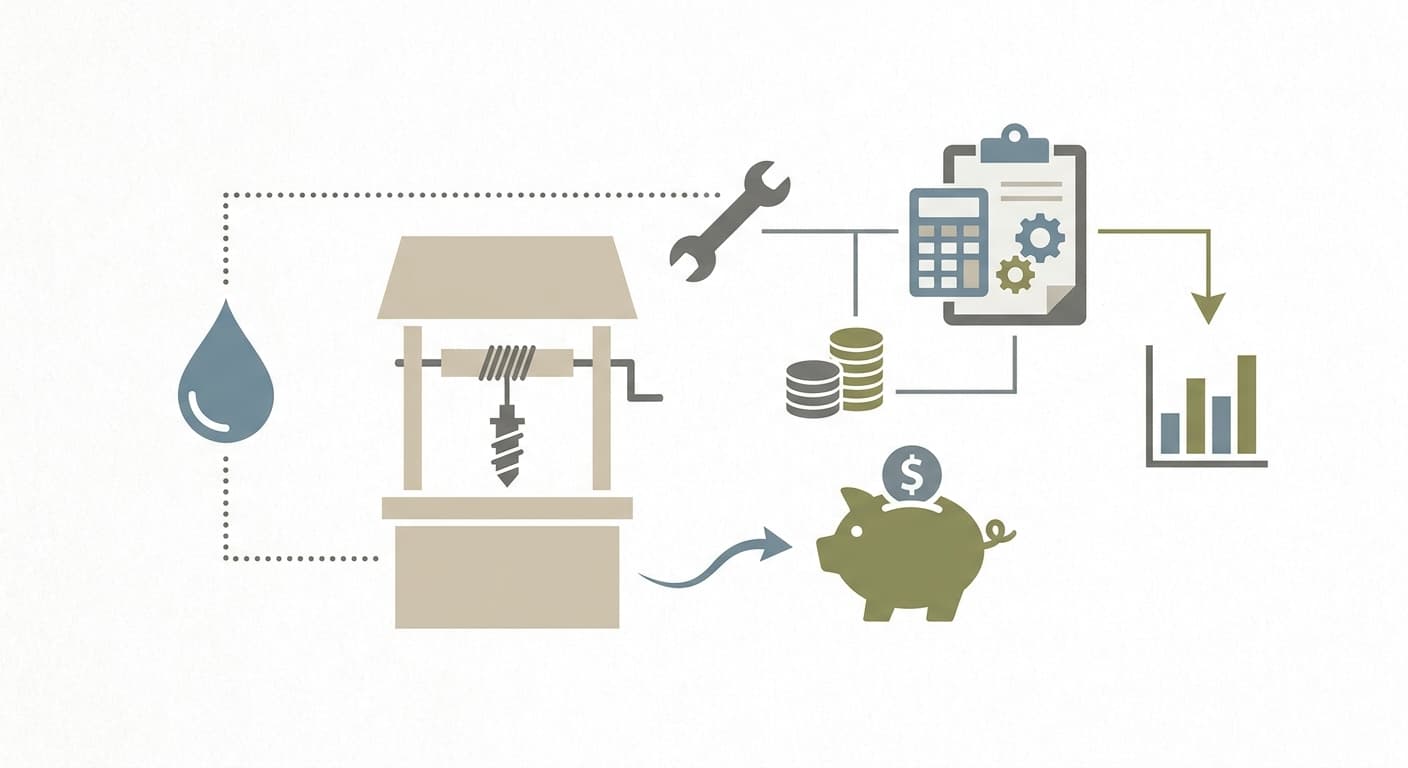
A complete water well installation costs $3,500 to $15,000 in 2026, with drilling alone averaging $25 to $65 per foot. A standard 200-foot drilled well with casing and a submersible pump runs about $6,000 to $12,000 all-in. Driven point wells are the cheapest at roughly $10 per foot, while hard-rock drilling can push past $75 per foot. Estimate your specific build with the Water Well Calculator.
Geology is what blows up well budgets. Picture a 200-foot drilled well quoted at an honest $35 a foot for soft soil. If the rig hits granite at 90 feet and the rate jumps to $62 a foot for the remaining 110, drilling alone goes from a planned $7,000 to nearly $10,000 — a roughly $2,970 surcharge no one priced in. The lesson: the per-foot rate is only half the estimate. Depth and rock type drive the other half, and you do not know either one until the rig is turning.
This guide breaks every line item down with 2026 numbers you can re-derive yourself. It is the data companion to our interactive tool, so use the article to understand the math and the calculator to run your own figures.
Water Well Installation Cost at a Glance
The total install is the sum of five components: drilling, casing, the pump, electrical and the pressure tank, and permits plus testing. Here is the 2026 range for a typical residential project.
| Component | Low | Typical | High | Notes |
|---|---|---|---|---|
| Drilling | $2,500 | $7,000 | $13,000 | Depth x per-foot rate |
| Casing | $750 | $1,200 | $2,000 | 50 ft of 6" PVC or steel |
| Pump | $400 | $1,200 | $2,000 | Jet to submersible |
| Electrical + pressure tank | $500 | $1,100 | $1,800 | Wiring, controls, tank |
| Permits + water testing | $100 | $400 | $650 | Permit plus full panel |
| Total | $4,250 | $10,900 | $19,450 | Most homes land $6k-$12k |
According to HomeGuide, installing a private water well typically costs between $3,500 and $15,000, with the final price driven largely by required depth and distance from the home. Angi reports a similar national figure, noting drilling alone often falls in the $25 to $65 per-foot band.
Tip
Get the per-foot rate AND a hard-rock surcharge in writing. Many drillers quote a soft-soil rate, then bill a higher rate for rock without telling you upfront. Ask: "What does the rate become if you hit bedrock, and at what depth do you expect it?" The neighboring well completion logs filed with your state health department are the best free predictor.
Well Drilling Cost Per Foot by Type
Well type sets the base drilling rate and caps how deep you can practically go. Drilled wells dominate residential installs because they reach reliable aquifers; the cheaper well types only work in specific shallow conditions.
| Well Type | Cost Per Foot | Practical Depth | Best For |
|---|---|---|---|
| Drilled | $25 - $65 | 100 - 400 ft | Primary home water supply |
| Driven point | $10 | 15 - 30 ft | Cabins, garden irrigation |
| Dug | $50 | 10 - 30 ft | Large-diameter shallow aquifers |
| Bored | $25 | 50 - 100 ft | Moderate depth in soft soil |
A drilled well is the only type that scales to the 100-to-400-foot depths most homes need. The wide $25-to-$65 range reflects geology: soft sediment like sand and clay drills at the low end, while granite and limestone run $45 to $65 per foot, and remote or sloped sites can hit $75 per foot per Angi.
A driven point well looks tempting at $10 per foot, but it only works in loose sandy soil down to about 30 feet. That makes it a backup or irrigation option, not a primary house supply in most regions.
Warning
Do not size a household water supply around a driven or dug well. They top out near 30 feet, sit in the contamination zone for surface runoff and septic seepage, and dry up first in a drought. State health departments require most drinking-water wells to be at least 50 to 100 feet from any septic system, which usually forces a drilled well.
Worked Example: A Standard 200-Foot Drilled Well
Numbers are only useful if you can reproduce them. Here is the full math for a typical 3-to-4-bedroom home in soft soil. Every figure below reconciles to the total.
- Drilling: 200 ft x $35/ft = $7,000
- Casing: 50 ft of 6" PVC x $18/ft = $900
- Submersible pump: $1,200
- Electrical + pressure tank: $1,000
- Permit + full water test: $400
- Total: $10,500
That $10,500 sits right in the national typical band. Now swap in granite from 90 feet down — the same scenario from the intro. The first 90 feet cost 90 x $35 = $3,150. The remaining 110 feet at the $62 hard-rock rate cost 110 x $62 = $6,820. Drilling alone becomes $3,150 + $6,820 = $9,970, and the all-in total climbs to about $13,470. The depth did not change; the rock did, and it added roughly $2,970 to drilling.
Run your own depth, rate, and pump assumptions in the Water Well Calculator to see the total update instantly.
Casing, Pump, and Pressure Tank Costs
Casing
Casing is the pipe that lines the borehole to stop collapse and seal out surface water. Code typically requires it to extend 12 inches above grade and 20 to 50 feet into bedrock. PVC casing runs $15 to $20 per foot; steel runs $25 to $40 per foot. A 50-foot run lands at $750 to $2,000.
Pump
The pump choice depends on depth. Submersible pumps handle the deep wells most homes need and are the default residential pick.
| Pump Type | Cost | Max Depth | Notes |
|---|---|---|---|
| Submersible | $800 - $2,000 | 400 ft | Most reliable, sits in the casing |
| Shallow jet | $400 - $800 | 25 ft | Above ground, simple |
| Deep jet | $600 - $1,200 | 110 ft | Two-pipe system |
| Solar | $1,500 - $3,000 | 200 ft | Off-grid, daylight pumping |
Pressure tank and electrical
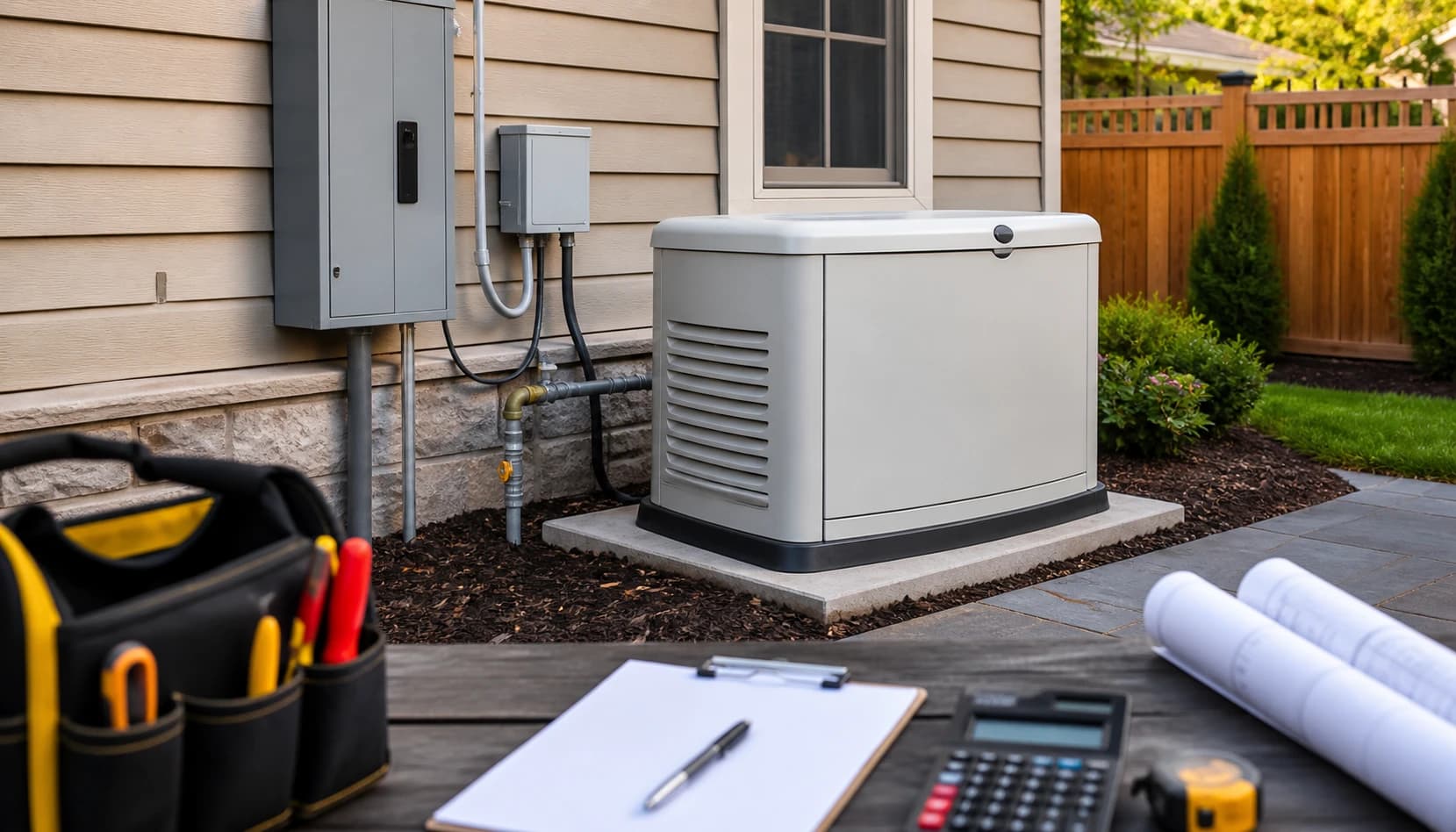
A 20-to-40-gallon pressure tank ($200 to $500) stores water so the pump is not cycling on every faucet turn. Wiring, a control box, and a pressure switch add $300 to $800. Together, the electrical and tank package usually runs $500 to $1,800.
Important
Yield matters as much as depth. A well that tests at 5 gallons per minute (GPM) comfortably serves a family of four using about 300 gallons per day. A 3 GPM well covers a 1-to-2-person home. Insist on a 4-hour pump test at drilling: a well that gives 5 GPM in hour one can drop to 2 GPM by hour four if aquifer recovery is slow.
Related Well-Project Installation Costs
A well is one piece of a private water system, and the build often spills into adjacent line items — water treatment for the well output and finishing work if you add a pump house. The 2026 cost research below feeds those decisions, and each maps to a dedicated calculator.
| System | Typical Installed Cost | Source |
|---|---|---|
| Water well (200 ft drilled) | $6,000 - $12,000 | HomeGuide / Angi |
| Water softener | $1,200 - $3,800 | Angi |
| Whole-house water filtration | $850 - $5,400 | HomeGuide |
| Pump-house drywall (per sheet, installed) | $30 - $70 | HomeGuide |
Well water is almost always hard or mineral-heavy, so a softener is a common follow-on purchase. Price one with the Water Softener Install Cost Calculator. For taste, sediment, and contaminant control across the whole home, the Whole House Water Filter Cost Calculator covers carbon, sediment, and reverse-osmosis options. If your well project includes a new pump house or finished utility room, the Drywall Install Cost Calculator handles that line item.
Permits, Location, and Timeline
Most states require a drilling permit costing $50 to $500 before any work starts. The application usually needs a site plan showing the well at least 50 to 100 feet from the septic system, 10 to 25 feet from property lines, and 5 to 10 feet from buildings. Approval takes one to four weeks.
Placement should put the well uphill from any septic field or animal area, with 40 to 60 feet of overhead clearance for the rig and a short pipe run to the house. A hydrogeologist consultation ($500 to $1,500) can pinpoint the best spot using geological maps and neighboring well logs.
From permit to running water, expect two to six weeks: one to two weeks for the permit, one to three days of drilling (50 to 100 feet per day in sedimentary rock), one to two days for the pump and electrical, and one to two days for testing and commissioning. Hard rock can triple the per-foot drilling time.
How to Cut Your Well Installation Cost
- Pull neighboring completion logs. Free from the state, they reveal likely depth and yield so you are not over-drilling.
- Drill in the dry season. Rigs move faster on firm ground, and you avoid mud-handling surcharges.
- Keep the well close to the house. Every extra 50 feet of trench and wire adds $200 to $500.
- Bundle the water test. A full panel costs $100 to $150 once; testing piecemeal later costs more.
- Get three licensed-driller quotes with per-foot rates, casing spec, pump brand, and the hard-rock surcharge spelled out.
For a deeper breakdown of well drilling math, casing, and pump sizing, see our Water Well Calculator and its worked cost examples.
Frequently Asked Questions
Water well installation cost estimator: how much does a well cost in 2026?
A complete residential water well costs $3,500 to $15,000 installed in 2026, with most 200-foot drilled wells landing between $6,000 and $12,000. Drilling runs $25 to $65 per foot, casing adds $750 to $2,000, and a pump runs $400 to $2,000. Use the Water Well Calculator to estimate your exact figure from depth and rock type.
Drywall installation cost estimator: what does drywall cost to install?
Drywall installation costs $1.50 to $3.50 per square foot, or $30 to $70 per 4x8 sheet including hanging, taping, and finishing, per HomeGuide. Material alone is $10 to $20 per sheet, while labor for hanging runs $0.85 to $1.90 per square foot. Estimate a pump house or utility room with the Drywall Install Cost Calculator.
Whole house water filtration system installation cost: what should I budget?
A whole-house water filtration system costs $850 to $5,400 installed on average, with a whole-house reverse osmosis system running $4,800 to $8,000, according to HomeGuide. Plumber labor of four to eight hours drives much of the install cost. Price your setup with the Whole House Water Filter Cost Calculator.
Water softener installation cost: how much for a well water home?
Most homeowners pay $1,200 to $3,800 for a water softener including installation in 2026, per Angi. The unit alone is $300 to $7,000 depending on capacity and hardness, with basic labor near $150. Well water is usually hard, so size yours with the Water Softener Install Cost Calculator.
How deep does a residential water well need to be?
Most residential drilled wells are 100 to 300 feet deep, though arid western regions often reach 300 to 500 feet and coastal plains may hit water at 20 to 50 feet. The local water table sets the minimum depth. Deeper wells generally hold more consistent yield through droughts, while wells under 50 feet face higher contamination risk.
How many gallons per minute does my household need?
A typical home needs 3 to 5 GPM of sustained well yield. A 3 GPM well serves a 1-to-2-person household, while 5 GPM comfortably covers a family of four using about 300 gallons per day. Morning peaks can spike to 10 to 15 GPM, which a 20-to-40-gallon pressure tank absorbs without overworking the pump.
Is drilling cost the only big expense in a well install?
No. Drilling is roughly 60 to 70 percent of the total, but casing ($750 to $2,000), the pump ($400 to $2,000), electrical and the pressure tank ($500 to $1,800), and permits plus testing ($100 to $650) together add several thousand dollars. Always estimate the full system, not just the per-foot drilling rate.
Related Articles
- How Much Does a Water Heater Cost in 2026? — Pair your new well with a right-sized water heater; tank vs. tankless pricing.
- Gas vs. Electric Water Heater Cost — Fuel and operating-cost comparison for the rest of your plumbing.
- How Much Does Drywall Cost in 2026? — Finishing a pump house or utility room near your well.
Related Calculators
- Water Well Calculator — Drilling, casing, pump sizing, and daily yield for your property.
- Water Softener Install Cost Calculator — Size and price a softener for hard well water.
- Whole House Water Filter Cost Calculator — Carbon, sediment, and reverse-osmosis filtration pricing.
- Drywall Install Cost Calculator — Per-sheet and per-square-foot install estimates.
- Septic Tank Calculator — Size the septic system that must sit 50-100 ft from your well.
This article provides general pricing information for educational purposes. Actual costs vary by location, geology, contractor, and project specifics. Get 3-5 local quotes before committing to a project.
Sources: HomeGuide Well Drilling Cost, Angi Well Drilling Cost, HomeGuide Water Filtration Cost, Angi Water Softener Cost, HomeGuide Drywall Installation Cost
This article is provided for informational and educational purposes only. Content should not be considered professional financial, medical, legal, or other advice. Always consult a qualified professional before making important decisions. UseCalcPro is not responsible for any actions taken based on the information in this article.
Try These Calculators
Estimate water well drilling costs, pump sizing, casing needs, and daily yield for residential wells. Covers drilled, driven, dug, and bored well types.
Estimate 2026 well pump replacement cost by pump type, well depth, and scope. Submersible deep-well runs $1,500\u2013$3,500 installed; shallow jet $800\u2013$2,000.
Estimate 2026 gutter installation cost by home size, material, and stories. Aluminum, copper, and seamless jobs typically run $900 to $5,200 nationwide.
Estimate 2026 soffit and fascia repair cost by linear feet, material, and rot. Vinyl, aluminum, and wood jobs typically run $600 to $6,000 nationwide.
Estimate 2026 asphalt driveway install cost by size, thickness, and region. New paving runs $7-$13/sqft; replacement $8-$15/sqft; overlay $3-$7/sqft all-in.